

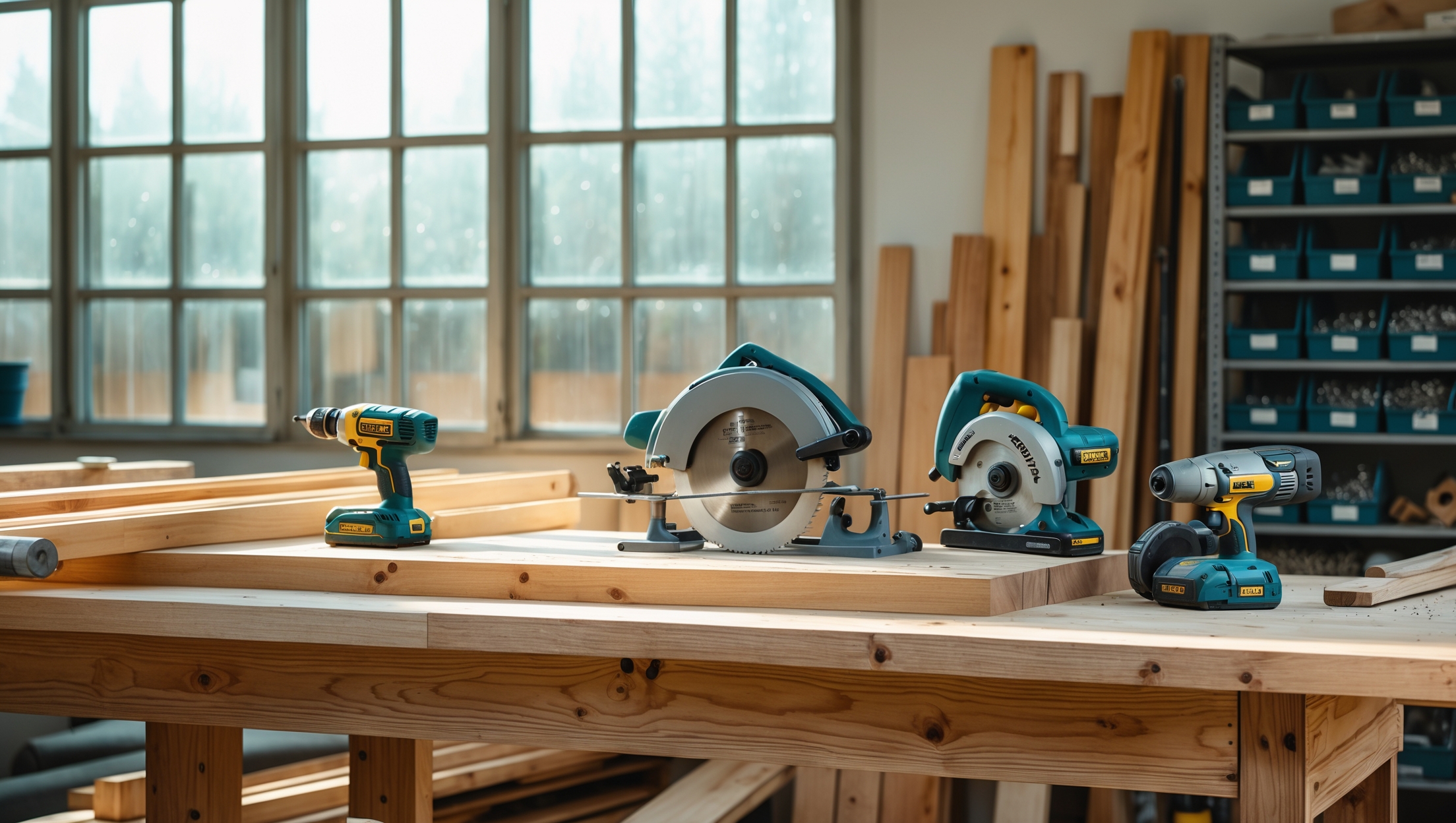
Introduction: Why the Right Power Tools Matter for Home Improvement
Whether you’re tackling a weekend DIY project or planning a full-scale renovation, the right power tools can make the difference between frustration and flawless results. For homeowners eager to handle repairs, upgrades, or creative builds, investing in a thoughtful selection of essential power tools is not just about convenience—it’s about safety, efficiency, and achieving professional-grade finishes. However, walking into a hardware store can be overwhelming: aisles of drills, saws, sanders, and multitools all promising to be indispensable. Which ones do you really need? How do you choose quality without overspending? And what maintenance or safety considerations should guide your investment? This guide breaks down the must-have power tools for every home improvement enthusiast, explains key features to look for, shares practical usage tips, and helps you avoid costly mistakes. Whether you’re a beginner or looking to upgrade your kit, these insights will empower you to work smarter, safer, and with confidence on projects big and small.
Core Power Tools Every Homeowner Should Own
1. Cordless Drill/Driver
The cordless drill/driver is the undisputed workhorse of any home toolkit. From assembling furniture to hanging shelves or drilling into masonry, its versatility is unmatched.
- Key Features: Look for lithium-ion batteries (longer run time, lighter weight), a variable speed trigger, and a clutch with multiple settings for screwdriving precision.
- Usage Tips: Invest in a quality set of drill and driver bits. Always use the right bit for the material to avoid stripping screws or damaging surfaces.
- Buying Advice: Choose a reputable brand with good warranty support. Consider combo kits that include extra batteries and a charger.
2. Circular Saw
For straight, accurate cuts in lumber, plywood, and other sheet goods, a circular saw is essential. It’s the go-to saw for framing, decking, and even rough cabinetry work.
- Key Features: Prioritize saws with adjustable bevel and depth controls, an easy-to-read guide, and at least a 15-amp motor for corded models (or 18V for cordless).
- Usage Tips: Use the correct blade for your material. Clamp workpieces securely and mark your cut line clearly before starting.
- Buying Advice: Cordless circular saws offer flexibility for outdoor or remote work, but corded versions are generally more powerful for heavier jobs.
3. Jigsaw
When you need curved or intricate cuts, especially in wood, plastic, or metal, nothing beats a jigsaw. It’s ideal for cutting holes, shaping panels, or trimming flooring.
- Key Features: Look for a tool-less blade change system, variable speed control, and orbital action for smoother cuts.
- Usage Tips: Use fine-tooth blades for clean cuts in wood or laminate, coarser blades for rough work. Let the blade do the work—don’t force the saw.
- Buying Advice: A corded jigsaw is best for extended use, while cordless models excel for portability and convenience.
4. Oscillating Multi-Tool
This versatile tool can sand, cut, scrape, and grind in tight spaces where other tools can’t reach. Perfect for detail work, removing grout, or undercutting door jambs.
- Key Features: Quick-change accessory system, variable speed, and a comfortable grip are musts.
- Usage Tips: Always use the correct accessory for the task. Move slowly and let the oscillation do the work for a smooth finish.
- Buying Advice: Invest in a starter kit with a range of blades and sanding pads. Make sure refills are readily available for your chosen brand.
5. Random Orbital Sander
No tool produces a smooth, swirl-free finish quite like a random orbital sander. It’s essential for prepping surfaces before painting, refinishing furniture, or smoothing repairs.
- Key Features: Choose a model with variable speed, good dust collection, and easy sandpaper changes (hook-and-loop system preferred).
- Usage Tips: Always start with a coarser grit and move to finer grits. Keep the sander moving to avoid gouging the surface.
- Buying Advice: Corded models are best for prolonged use. For small jobs or portability, a cordless sander suffices.
Specialty Power Tools for Advanced Home Improvement
6. Impact Driver
While similar in form to a drill, the impact driver delivers much higher torque, making it ideal for driving long screws or bolts into dense materials without stripping.
- Key Features: Compact design, high torque rating, and compatibility with standard 1/4-inch hex bits.
- Usage Tips: Use impact-rated bits and start slow to maintain control. Essential for deck building, framing, or heavy-duty fastening.
- Buying Advice: Many brands sell drill/impact driver combo kits for added value.
7. Reciprocating Saw
The reciprocating saw excels at demolition, pruning, or cutting through nails and pipes. Its aggressive action is ideal for remodeling or removing old structures.
- Key Features: Tool-less blade change, variable speed, and a pivoting shoe for better control.
- Usage Tips: Match the blade to your material (wood, metal, or demolition). Wear safety glasses—this tool kicks up debris.
- Buying Advice: Cordless models allow for maximum mobility during demolition or outdoor work.
8. Power Miter Saw
For precision crosscuts and miters, especially in trim, molding, or framing, a miter saw is a game-changer. It’s indispensable for projects that require accuracy and repeatability.
- Key Features: Choose a compound (or sliding compound) miter saw for angled and beveled cuts. Look for positive stops and a clear laser guide.
- Usage Tips: Always secure your material and double-check your angle before cutting. Let the blade reach full speed before making contact.
- Buying Advice: Sliding models increase capacity for wider boards but cost more. Buy based on your project needs and available space.
9. Table Saw (for Serious DIYers)
If you plan to tackle cabinetry, built-ins, or furniture making, a table saw provides unmatched accuracy and power for ripping and crosscutting sheet goods and lumber.
- Key Features: Sturdy fence system, riving knife for safety, and a powerful motor (at least 1.5 HP for home use).
- Usage Tips: Always use push sticks and blade guards. Keep the area clear and never reach over the blade.
- Buying Advice: For small spaces, consider a portable jobsite table saw. For dedicated workshops, a contractor or cabinet saw offers more power and stability.
How to Choose the Right Power Tool: Key Considerations
Brand Reputation and Warranty
Top brands like DeWalt, Makita, Milwaukee, Bosch, and Ridgid consistently receive high marks for durability, innovation, and after-sales service. A good warranty can save you money and hassle in the long run.
Power Source: Corded vs. Cordless
Most modern tools offer both options. Cordless tools now rival corded models in power, especially in the 18V-20V range. Corded tools are best for continuous, heavy-duty work, while cordless excels in flexibility and portability. Consider your typical project location and duration.
Ergonomics and Weight
A tool should feel comfortable in your hand and be well-balanced. Try before you buy, if possible. Lighter tools reduce fatigue during extended use and are safer for overhead or ladder work.
Accessory Compatibility
Some brands have proprietary battery systems or accessories. Choosing a single brand ecosystem can save money on batteries and chargers and ensure compatibility among future purchases.
Price vs. Quality
While budget models can handle light tasks, investing in mid-range or pro-grade tools pays off for frequent use. Evaluate your project needs and buy the best you can afford—cheap tools often wear out quickly or lack precision.
Smart Buying Strategies: Getting the Best Value
- Watch for Combo Kits: Bundles with multiple tools, batteries, and a charger are often more cost-effective than buying separately.
- Take Advantage of Sales: Major holidays (Black Friday, Memorial Day, Father’s Day) frequently feature discounts on power tools.
- Buy Refurbished or Certified Pre-Owned: Many top brands sell factory-refurbished units with full warranties at significant savings.
- Check Local Tool Libraries: Some communities offer tool lending programs—ideal for one-off projects or trying before you buy.
Power Tool Safety Checklist
Power tools are safe when used responsibly. Follow these best practices for every project:
- Wear safety glasses or goggles at all times.
- Use hearing protection when operating saws or hammer drills.
- Keep loose clothing and hair tied back to avoid entanglement.
- Inspect tools and cords for damage before use.
- Unplug (or remove battery from) tools before changing accessories or making adjustments.
- Maintain a clean, well-lit workspace free of tripping hazards.
- Follow manufacturer’s instructions for setup and operation.
- Never bypass safety guards or interlocks.
Maintaining Your Power Tools: Tips for Longevity
- Clean After Use: Wipe down tools to remove dust and debris. Use compressed air for hard-to-reach areas.
- Sharpen or Replace Blades Regularly: Dull blades strain motors and produce poor results.
- Store Tools Properly: Keep tools in a dry area, ideally in cases or toolboxes to prevent damage and rust.
- Charge Batteries Correctly: Avoid leaving batteries on the charger for extended periods. Store lithium-ion batteries partially charged and in a cool place.
- Schedule Annual Maintenance: For high-use tools, consider professional servicing once a year.
Frequently Asked Questions
Can I get by with just hand tools?
Hand tools suffice for very basic repairs, but power tools dramatically speed up tasks, improve consistency, and enable more complex projects.
Is it worth buying cordless tools if I rarely do projects?
If you’ll use them only occasionally, a couple of quality cordless tools (drill/driver and jigsaw, for example) are usually sufficient. They’re easier to store and set up than corded models, with fewer tripping hazards.
How do I know when to upgrade my tools?
If your current tools are unreliable, lack the power needed, or can’t accommodate new accessories, it may be time to upgrade. Also, if you’re expanding into new types of projects (e.g., furniture making), specialized tools are a smart investment.
Conclusion: Building Your Power Tool Arsenal for Success
Choosing the right power tools is a foundational step in any successful home improvement journey. A carefully selected toolkit not only increases your efficiency but also ensures your projects are completed with precision and safety. By starting with core essentials like a cordless drill, circular saw, jigsaw, and sander, you’ll be prepared for the vast majority of household upgrades and repairs. As your skills and ambitions grow, adding specialty tools such as an impact driver, reciprocating saw, or miter saw will empower you to tackle advanced projects with confidence.
Remember, investing in quality tools pays dividends in reliability, ease of use, and long-term savings. Take the time to research brands, try out models in-store, and purchase only what you’ll truly use. Adhering to best practices for maintenance and safety will protect both your tools and yourself, ensuring enjoyable DIY experiences for years to come. Whether you’re hanging shelves, building a deck, or crafting custom furniture, the right power tools transform ideas into reality—making every home improvement project smoother, safer, and more satisfying. Start building your arsenal today and enjoy the rewards of empowered, hands-on home ownership.
I’m just getting started with DIY, so is it better to buy essential power tools individually, or should I look into one of those combo kits you mentioned? Are there trade-offs in quality or price?
Combo kits are often more cost-effective if you need several tools, and they usually come with matching batteries and chargers. However, buying tools individually lets you choose higher quality or specialized options for each tool. Combo kits may sacrifice a bit on tool quality or versatility, but they’re great for beginners starting a toolkit.
You suggest combo kits for drills to get extra batteries and a charger—do you think it’s better to invest in those upfront or buy individual pieces as needed over time?
Investing in a combo kit upfront is often more cost-effective, especially if you plan to use multiple tools or need extra batteries and a charger. Combo kits usually offer better value and ensure compatibility among batteries. However, if you only need a single tool, buying individually might make more sense initially.
You mention combo kits for drills—do you recommend those over buying tools individually, especially for beginners? Are there any downsides to the kits like lower quality batteries or accessories?
Combo kits are convenient and often cost less than buying tools separately, which is great for beginners starting from scratch. However, some kits include lower-capacity batteries or basic accessories that may not be as durable. If you plan to use your tools frequently or for demanding tasks, you might want to check what’s included and consider upgrading certain items later.
Do you have any advice on how to prioritize which power tools to buy first if I’m on a limited budget but want to cover the basics for most home repairs?
If you’re on a limited budget, start with versatile tools: a cordless drill/driver, a circular saw, and a jigsaw. These cover most basic repairs and DIY tasks. Next, consider a sander or an oscillating multi-tool, depending on the projects you tackle most often.
Can you give some advice on how to spot a quality cordless drill that won’t break the bank? I’m worried about buying a cheap one that doesn’t last.
To spot a quality cordless drill at a reasonable price, look for a reputable brand, lithium-ion batteries, at least 12-18 volts of power, and good user reviews. Metal chucks and variable speed settings are also signs of durability. Avoid the lowest-priced models, as they often use weaker parts that wear out quickly.
Could you share some basic maintenance tips to keep power tools like drills and saws running well over time, especially for beginners who are just building their collection?
Absolutely! Always keep your tools clean and free of dust after each use. Regularly check for loose screws or parts, oil moving parts as recommended in the manual, and store your tools in a dry place to prevent rust. For saw blades and drill bits, keep them sharp and replace them when worn.
If I’m just starting out and have a limited budget, which two or three power tools from your list should I prioritize buying first?
If you’re just starting out, focus on a cordless drill and a circular saw. These two tools handle most basic projects, from assembling furniture to cutting wood. If your budget allows for a third, consider an orbital sander for smooth finishes on wood surfaces.
When choosing between a circular saw and a miter saw for home projects, which would you recommend starting with for general repairs and why?
For general home repairs, a circular saw is usually more versatile and a better starting point. It can handle straight cuts in lumber, plywood, and other materials, making it useful for a wide range of basic projects. A miter saw is great for angled cuts but is more specialized.
For someone interested in adding a circular saw to their toolkit, are there specific safety features or maintenance routines I should prioritize to avoid issues down the line?
When choosing a circular saw, make sure it has a reliable blade guard, electric brake, and a safety lock switch. For maintenance, regularly clean dust from the vents, check the blade for sharpness, and ensure bolts are tight. Always unplug the saw before any maintenance or blade changes.
You mentioned looking for a cordless drill with a clutch and variable speed, but I always see corded options for cheaper prices. For typical home repairs, is cordless always worth the extra investment or are there situations where a corded drill is actually better?
Cordless drills are great for portability and convenience, especially for quick fixes or working in tight spots. However, corded drills often deliver more consistent power and are ideal if you’ll be drilling for long periods without worrying about batteries. For occasional home repairs, cordless is usually preferred, but corded can be a better value if you don’t need mobility.
If I’m a complete beginner looking to start with just one or two power tools from your list, which would you recommend prioritizing first, considering safety and versatility?
If you’re just starting out, I recommend beginning with a cordless drill and a circular saw. The cordless drill is very versatile for assembling furniture, hanging shelves, and small repairs, while the circular saw is useful for most basic cutting tasks. Both are beginner-friendly and, with proper safety precautions, easy to learn.
Could you elaborate on how to decide between buying individual tools versus a combo kit when first starting to build a power tool collection? I’m not sure which would be more cost-effective for someone new to home improvements.
Choosing between buying individual tools or a combo kit depends on your needs and budget. Combo kits are usually more cost-effective if you need several basic tools, as they offer multiple items at a lower total price. If your projects require only specific tools, buying individually avoids paying for extras you won’t use.
I’m interested in starting with just the basics for a limited budget. If I were to invest in only one or two of the core power tools you mentioned, which would you recommend prioritizing for general home repairs?
If you’re starting on a budget, a cordless drill is the most versatile tool to have for general home repairs. If you can add a second tool, consider a circular saw for basic cutting tasks—it covers many projects around the house.
You mention combo kits for drills that include extra batteries and chargers. Are those kits usually worth it compared to buying everything separately?
Combo kits that include drills, extra batteries, and chargers typically offer better value than buying each item separately. They often cost less overall, ensure compatibility between components, and provide the convenience of having everything you need in one package. It’s a good option, especially for beginners or if you need several pieces at once.
When it comes to selecting between different reputable brands for essential power tools, what features or support should I prioritize if I’m on a tight budget but still want quality?
If you’re on a budget but want quality, focus on key features like tool durability, battery life (for cordless tools), and basic safety features. Also, check warranty length and the availability of customer support or service centers, as these can save you money and hassle in the long run.
Could you explain the main differences between circular saws for beginners? I’m worried about getting something too heavy or difficult to control since I haven’t used one before.
Circular saws come in different sizes and weights. For beginners, a compact or mini circular saw is lighter and easier to handle than full-sized models. Cordless options are more portable but may have less power. Look for features like ergonomic grips and blade guards for better control and safety. Starting with a smaller, basic model is a good idea if you’re new to using power saws.
When choosing between combo kits and buying individual power tools separately, what factors should a homeowner consider to get the best value without compromising on quality?
Consider how many tools you actually need, your preferred tool brands, and your budget. Combo kits can save money and ensure compatibility, but buying individually lets you choose exact models and potentially higher quality. Also, check warranty terms and included accessories with each option.
You mention combo kits for cordless drills that include extra batteries and a charger. Are these kits generally a better value compared to buying everything separately, especially for someone just starting a toolkit?
Combo kits that bundle cordless drills with extra batteries and a charger usually offer better value than purchasing each item separately. For beginners building their toolkit, these kits are often more cost-effective and convenient, ensuring you have compatible batteries and accessories right away.
If I mostly do small repairs or furniture assembly around the house, do I really need to invest in both a cordless drill and a circular saw, or could I get by with just the drill?
For small repairs and furniture assembly, a cordless drill is usually sufficient. You likely don’t need a circular saw unless you plan to cut large boards or do more involved carpentry work. Start with just the drill and add other tools only if your projects require them.
How do I know when it’s worth upgrading from an entry-level power tool kit to more professional-grade versions? Is there a noticeable difference in performance for typical home projects?
If you find yourself tackling bigger or more frequent projects, professional-grade tools often offer more power, durability, and features that save time. For light, occasional tasks, entry-level kits work well, but for regular or demanding use, you’ll notice pro tools handle tougher jobs more easily and last longer.
Could you explain a bit more about how to set the clutch properly on a drill for different materials? I’m always nervous about stripping screws, and the article mentioned precision settings but I’m not sure how to figure out the right one.
To set the clutch on your drill, start with a low setting and test on scrap material. For soft materials like drywall, use a lower number; for harder materials like hardwood, increase the clutch gradually. Stop as soon as you feel resistance—this helps prevent stripping screws.
You mention looking for reputable brands with good warranty support for cordless drills. Are there specific brands or models you recommend for someone who is new to DIY and wants reliability without spending too much?
For beginners, brands like DeWalt, Makita, and Bosch offer reliable cordless drills that are user-friendly and reasonably priced. The DeWalt 20V Max, Makita XFD10R, and Bosch 18V Compact models are all great options. They provide solid warranty support and performance without breaking the bank.
You mentioned the importance of choosing a reputable brand for power tools. Are there specific brands you’ve found to be most reliable for beginners, especially when it comes to cordless drill/drivers?
For beginners, brands like DeWalt, Makita, Milwaukee, and Bosch are known for their reliable cordless drill/drivers. These brands offer user-friendly models with good warranties and widely available replacement parts. If you’re looking for something more budget-friendly, Ryobi and Black+Decker also have solid cordless options for home use.
Could you suggest which power tools would be best to buy first for someone just starting out on a tight budget, beyond the cordless drill and circular saw?
After a cordless drill and circular saw, a jigsaw and a basic orbital sander are great budget-friendly additions. A jigsaw offers versatile cutting for curves and straight lines, while an orbital sander helps smooth surfaces efficiently. These tools cover many beginner DIY needs without a big investment.
For someone on a limited budget looking to start a basic tool collection, which of these essential power tools should be prioritized first, and are there any acceptable areas to compromise on features or brands?
If you’re starting out on a budget, prioritize a cordless drill and a circular saw, as they’re the most versatile for home projects. It’s okay to choose reliable entry-level brands and basic models—skip premium features like brushless motors or extra batteries until you know you’ll need them.
You mention investing in a quality set of drill and driver bits. How many different types of bits would you recommend starting out with for general home projects?
For general home projects, starting with a set that includes at least a few sizes of standard twist drill bits (for wood and metal), a selection of Phillips and flathead driver bits, and some masonry bits is a good idea. Around 10 to 15 assorted bits should cover most basic household needs.
You mentioned combo kits for drills—do those usually come with quality bits or would it be better to purchase bits separately for better performance and durability?
Combo kits typically include a basic set of drill bits, but these are often of average quality. For better performance and durability, especially if you plan to tackle tougher projects, purchasing a high-quality drill bit set separately is usually a good idea.
You mention that picking quality tools is key to avoiding costly mistakes. Are there certain budget-friendly brands that offer good warranty support and durability for beginners, or is it better to invest in premium brands from the start?
Several budget-friendly brands like Ryobi, Black+Decker, and Craftsman are known for offering decent durability and often provide solid warranty support, making them great choices for beginners. You don’t have to start with premium brands; these options balance affordability and reliability as you build your tool collection.
Could you share more about maintaining these essential power tools over time to ensure they stay safe and efficient? Are there specific maintenance routines you would recommend for beginners?
Keeping your power tools clean and dry after each use really helps extend their life. Regularly check cords for damage, lubricate moving parts if the manual suggests it, and replace worn-out bits or blades. Beginners should also read the user manuals for each tool, as they usually include simple, specific maintenance routines.
I’m starting to assemble my first tool kit and I’m not sure if it’s better to buy combo kits or single tools. Do combo kits usually offer enough quality for long-term use, or is it smarter to mix and match?
Combo kits are a good way to get essential power tools at a better value, and most major brands offer solid quality in their kits. However, if you want specific features or higher durability for certain tools, mixing and matching can be smarter. For a starter kit, a reputable combo set should serve you well for general home projects.
For a small business owner working mainly on interior renovations, are there certain power tools from your list that can be skipped or are absolutely essential beyond the drill and circular saw?
For interior renovations, essentials beyond a drill and circular saw include a jigsaw for detailed cuts, an oscillating multi-tool for tight spaces, and a power sander for smooth finishes. You can often skip tools like heavy-duty miter saws or reciprocating saws unless your projects involve frequent framing or demolition work.
You mention looking for combo kits with extra batteries and a charger when buying a cordless drill. Are those usually better value than buying tools and accessories separately, especially for someone on a budget?
Combo kits with extra batteries and a charger typically offer better value, especially if you’re starting from scratch. They often cost less than buying each item individually. For someone on a budget, these bundles can save money and ensure all parts are compatible with each other.
The article suggests using the right bit for different materials when drilling. Could you provide some examples of which types of bits are best for wood, masonry, and metal?
Absolutely! For wood, use standard twist bits or spade bits. For masonry, choose masonry bits with a carbide tip. When drilling into metal, high-speed steel (HSS) bits work well. Each type is designed to handle the specific demands of the material.
You mention the importance of choosing a reputable brand for cordless drills. Are there any budget-friendly brands that still offer decent quality and warranty support for beginners who don’t want to spend too much upfront?
Yes, there are several budget-friendly brands that offer reliable cordless drills with solid warranty support. Brands like Black+Decker, Ryobi, and Craftsman are popular with beginners for their affordability and dependable performance. They typically include warranties and good customer support, making them suitable for those just starting out with home improvement projects.
Could you share any tips on choosing between cordless and corded power tools for someone who mainly does weekend projects at home?
If your projects are mostly on weekends and around the house, cordless tools offer great convenience and portability, letting you work anywhere without worrying about outlets. However, corded tools can provide more consistent power for longer tasks. For general home use, a quality cordless set is usually more than enough.
You mention variable speed triggers and multiple clutch settings for drills—can you explain a bit more about what situations those features actually come in handy for? I’m a little confused about when to use them.
Variable speed triggers let you control how fast the drill spins—use slower speeds for starting holes or driving screws, and higher speeds for drilling through wood or metal. Multiple clutch settings help prevent overdriving screws or stripping them; set the clutch lower for delicate tasks and higher for tougher materials.
If I only have the budget for one or two power tools right now, which ones would be the most versatile for common home improvement tasks?
If your budget allows for only one or two power tools, a cordless drill and a circular saw are excellent choices. The cordless drill is versatile for drilling holes and driving screws, while the circular saw can handle a wide range of cutting tasks, from lumber to plywood.
Could you elaborate on what maintenance tasks are necessary to keep a cordless drill/driver in top shape, especially regarding battery care?
To keep your cordless drill/driver in top shape, regularly clean the vents and chuck, check for loose screws, and store it in a dry place. For battery care, avoid fully draining it, recharge after use, store the battery in moderate temperatures, and remove it from the tool if not used for extended periods.