

Introduction
Every home improvement enthusiast knows the thrill of tackling a new project. But as your collection of tools and supplies expands, keeping your workshop organized can quickly become a challenge. Cluttered benches, misplaced screwdrivers, and misplaced drill bits can slow down your progress and even create safety hazards. A well-organized workshop, on the other hand, not only boosts efficiency but also makes your projects more enjoyable, keeps your tools in top condition, and reduces the risk of accidents.
This comprehensive guide dives deep into practical, expert-backed tool storage solutions tailored for home workshops. Whether you’re working out of a spacious garage or a compact basement corner, you’ll find actionable strategies to maximize your space, streamline your workflow, and create a safer environment. From wall-mounted storage to mobile carts, clever small-space hacks to maintenance tips, we’ll cover everything you need to transform your workspace from chaotic to perfectly organized. Let’s get started on building a workshop that works as hard as you do.
Assessing Your Space and Needs
Analyze Your Workshop Layout
Before investing in storage solutions, evaluate your workshop’s layout. Consider:
- Dimensions: Measure floorspace, ceiling height, and wall length.
- Access Points: Identify doors, windows, and walkways to avoid obstructing movement.
- Power Outlets & Lighting: Ensure easy access for power tools and task lighting.
Inventory Your Tools
Sort your tools into categories (hand tools, power tools, fasteners, specialty items). Note items used most frequently and those used for occasional projects. This helps prioritize storage accessibility.
Identify Workflow Patterns
Consider how you move through tasks. Are there routines you repeat with every project? Efficient storage keeps frequently-used items within arm’s reach and less-used items stored away but accessible.
Core Storage Solutions for Every Workshop
Pegboards: Versatile Wall Storage
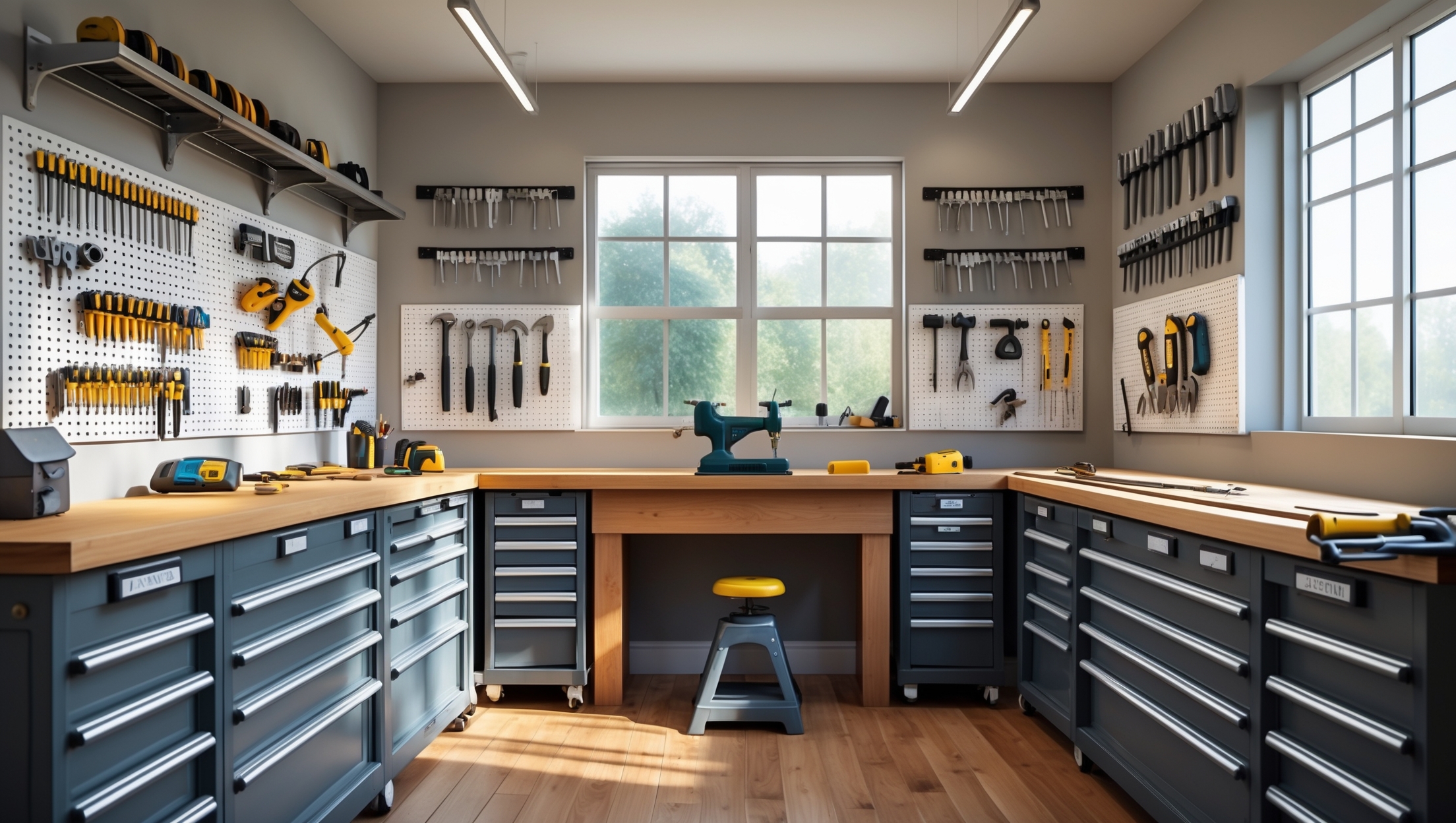
Pegboards offer flexible, customizable storage for hand tools and small accessories. Mount a sturdy pegboard above your main workbench to keep essentials visible and accessible. Use a variety of hooks, bins, and shelves to accommodate different tool shapes and sizes.
- Pros: Inexpensive, easy to rearrange, keeps tools visible.
- Cons: Not ideal for heavy tools, may require wall mounting expertise.
Wall-Mounted Shelving and Cabinets
Maximize vertical space with robust wall shelves or cabinets. Store bulkier power tools, paint cans, and seasonal supplies off the floor. Choose adjustable shelving for flexibility as your collection grows.
Drawer Units and Modular Cabinets
Invest in heavy-duty drawer units for organizing fasteners, drill bits, and small components. Modular cabinets offer stackable and reconfigurable storage, which is ideal if your needs change over time. Label each drawer clearly for quick identification.
Mobile Tool Carts
For larger workshops or multi-zone projects, mobile carts let you wheel your essential tools directly to your work area. Look for carts with lockable drawers, sturdy handles, and large casters for easy movement across uneven floors.
Smart Storage Ideas for Small Workshops
Overhead Storage Racks
Don’t ignore ceiling space—install overhead racks for storing infrequently-used items like lumber, pipes, or seasonal gear. Ensure secure attachment and use only for lightweight or medium-weight items to avoid risk of falling.
Magnetic Tool Holders
Magnetic strips mounted on walls or the side of workbenches keep metal tools such as screwdrivers, pliers, and wrenches instantly accessible. They’re ideal for small spaces and reduce drawer clutter.
Fold-Down Workbenches
A wall-mounted, fold-down workbench can free up valuable floor space. When not in use, simply fold it up to reclaim your workshop area.
Stackable Bins and Clear Containers
Use stackable bins for hardware, sandpaper, glues, and other small supplies. Transparent containers help you quickly spot what you need without rummaging. Stack vertically to optimize shelving space.
Specialty Storage Solutions
Power Tool Charging Stations
Create a dedicated charging area for cordless tools. Mount a power strip with surge protection above a shelf or cabinet, and add cable organizers to prevent tangled cords. Install shelves or cubbies to hold chargers and batteries safely.
Custom Tool Foam Inserts
For delicate or expensive tools, line drawers with custom-cut foam inserts. This protects each item from damage and ensures every tool has its designated spot, making it obvious when something’s missing.
French Cleat Storage Systems
French cleats are angled wooden strips mounted to the wall that support compatible shelves, bins, and tool holders. They’re incredibly strong, easy to rearrange, and perfect for workshops with changing storage needs.
Tape and Cord Organizers
Hang dowels or racks for easy access to rolls of tape, wire, and extension cords. Use cable reels or hooks to keep cords neatly wound and untangled.
Safety and Accessibility Considerations
Weight Distribution
Store heavier items on lower shelves or in floor cabinets to prevent tipping hazards. Never overload wall-mounted units beyond their rated capacity.
Clear Walkways
Maintain at least 36 inches of clearance in main walkways. Avoid placing storage units where they could block exits or limit emergency access.
Child and Pet Safety
If children or pets might access your workshop, use lockable cabinets for sharp or toxic items. Store ladders and hazardous chemicals out of reach.
Lighting and Visibility
Install bright, shadow-free lighting—especially above workbenches and storage walls. Consider motion-activated LED strips inside cabinets or drawers for instant visibility.
Maintenance: Keeping Your System Working
Regular Inventory Audits
Every few months, review your tool inventory. Remove duplicates, repair or replace broken items, and reorganize as needed. This prevents clutter and ensures you only store what you use.
Cleaning and Dust Control
Dust buildup can damage tools and reduce their lifespan. Wipe down shelves and cabinets regularly, and consider using sealed bins for sensitive electronics or power tools.
Label Updates
As you add new tools or supplies, update labels immediately. Use a label maker for clarity and consistency. Consider color-coded labels for different tool categories.
Adapting to New Projects
Each new project might require different tools or materials. Before starting, rearrange your storage to make the most-used items more accessible for the task at hand. Return everything to its proper place once the project is complete.
Budgeting for Workshop Organization
DIY vs. Store-Bought Solutions
Many storage solutions can be built inexpensively from plywood, PVC pipe, or repurposed furniture. However, investing in commercial cabinets or heavy-duty racks may be worthwhile for long-term durability and safety. Balance your budget with your organization needs and DIY skill level.
Prioritizing Investments
- Begin with core storage for your most-used tools (pegboards, drawers, shelves).
- Add specialty solutions (charging stations, foam inserts) as your needs grow.
- Upgrade lighting and safety features before aesthetic improvements.
Case Studies: Real-Life Workshop Transformations
Case Study 1: The Compact Basement Workshop
Sarah, a DIY hobbyist, transformed her 8×10 basement nook with a wall-mounted pegboard, fold-down workbench, and clear stackable bins. By relocating infrequently-used tools to a labeled cabinet, she gained room for larger projects and reduced setup time by 30%.
Case Study 2: The Garage Pro’s Mobile Station
Mike, a semi-professional renovator, prioritized mobility and efficiency. He invested in a heavy-duty rolling tool chest, modular wall cabinets, and a custom French cleat wall. This allowed him to quickly reconfigure his space for woodworking, plumbing, or electrical work without losing track of tools.
Conclusion
Investing in smart tool storage solutions is one of the most impactful steps you can take toward creating a more productive, enjoyable, and safe home workshop. The time you spend organizing your tools and workspace pays dividends in efficiency, reduces project frustration, and extends the life of your equipment. Whether you have a sprawling garage or a compact corner, there’s a storage strategy to fit your needs and budget.
Remember: start by evaluating your space, inventorying your tools, and observing your workflow. Implement core storage solutions first—pegboards, shelving, and drawer units—then layer on specialty storage for your unique tools and tasks. Don’t overlook safety considerations, like weight distribution and clear walkways, and make maintenance a regular part of your workshop routine.
Ultimately, an organized workshop isn’t just about aesthetics—it’s the foundation for successful projects, safer DIY endeavors, and a more enjoyable home improvement journey. Take the time to tailor these strategies to your space, and you’ll find yourself spending less time searching for tools and more time building, repairing, and creating. Your future self—and your finished projects—will thank you.
I have a pretty small basement workshop and limited wall space. Could you suggest specific storage solutions that maximize floor space without making the area feel cramped?
Consider using mobile tool carts or rolling cabinets that can be tucked under your workbench when not in use. Stackable bins or drawers under benches also help maximize storage. Pegboards on the backs of doors or fold-down wall-mounted workstations offer more storage without taking up much floor space.
What’s a reasonable budget for setting up basic tool storage if I’m just starting out and don’t want to overspend on fancy systems?
For a basic setup, you can expect to spend between $50 and $150. Look for durable plastic toolboxes, pegboards, and simple shelving units. These options keep things organized without requiring a big investment, and you can always upgrade later as your needs grow.
When assessing the workflow patterns you mentioned, what’s the best way to adjust storage for tools that are only used seasonally but still need to be easy to find?
For seasonally used tools, store them in clearly labeled bins or cabinets placed in less central but still accessible areas. Rotate these tools closer to your main work zone when their season arrives, and move out-of-season tools back to their designated space to keep your immediate area clutter-free.
Do you have any recommendations for organizing small power tools if your workshop doesn’t have a lot of wall space for pegboards?
If wall space is limited, consider using rolling tool carts, stackable bins, or drawer cabinets to store small power tools. You can also use shelves with labeled totes or cases. Look for storage solutions that fit under workbenches or make use of vertical space above or below existing furniture.
When organizing tools by frequency of use, how do you keep the less-used items accessible without letting them contribute to clutter?
Place less-used items in labeled bins or drawers on higher shelves or in less-central areas. This keeps them out of the way but still easy to find when needed. Regularly review your storage so rarely used tools don’t accumulate or block access.
When analyzing my workshop layout, how do I decide if wall-mounted storage like pegboards is better than mobile carts, especially in a basement with limited floor space?
Wall-mounted storage like pegboards maximizes vertical space, which is ideal for basements with limited floor area. Use pegboards for frequently used tools within easy reach. Mobile carts are best if you need to move tools around often, but they do take up floor space. Consider your workflow and access needs to choose the right balance.
After sorting my tools by frequency of use, what’s a simple way to decide which storage solutions to prioritize if I’m working with a tight budget and don’t want to over-invest up front?
Once you’ve sorted your tools by frequency of use, focus on affordable storage options for your most-used tools first, such as pegboards or wall-mounted racks. For less-used items, consider repurposing bins or drawers you already have. Start simple and expand your storage as needed.
How do you handle storing seasonal or rarely used power tools so they stay accessible but don’t take up valuable everyday workspace?
For seasonal or rarely used power tools, consider storing them on higher shelves or in labeled bins away from your main work area. Use clear containers or tool-specific cabinets so you can easily spot and access them when needed, but they won’t clutter your daily workspace.
The article mentions sorting tools by frequency of use. Is there a particular system or tool organizer you find especially effective for keeping everyday hand tools within easy reach?
A pegboard system is especially effective for keeping everyday hand tools visible and within easy reach. You can customize the arrangement with hooks and holders, making it simple to grab frequently used tools. Magnetic strips or a dedicated tool chest with shallow drawers near your main workspace are also great options to consider.
How can I estimate a reasonable budget for outfitting my garage with some of these storage solutions, especially if I want a mix of wall-mounted and mobile options?
To estimate a reasonable budget, start by listing the types and quantities of wall-mounted and mobile storage you need. Research prices for shelves, pegboards, cabinets, and carts at local stores or online. Add up the costs, factoring in installation materials or tools you might need. Setting aside 10–20% extra for unexpected expenses is also wise.
I have a mix of big power tools and small hand tools in my garage, and sometimes the wall space is limited. What are your favorite small-space storage hacks for situations like this, especially for things that don’t fit on pegboards?
For tight spaces, try using rolling tool carts or stackable bins under your workbench for bulky power tools. Magnetic strips or drawer inserts work well for small hand tools. Tall shelving units can maximize vertical corners, and ceiling-mounted racks are great for items you use less often. Label everything for quicker access.
What are some good tool storage options if my workshop only has a small corner available, and I can’t install anything on the walls due to rental restrictions?
For a small corner and no wall installations, consider a compact rolling tool cart, a stackable toolbox system, or a freestanding shelving unit. Pegboard panels that lean against the wall can also work if you need to hang tools without mounting anything. These options keep everything organized while making the most of limited space.
Before I buy any storage stuff, do you have tips for estimating how much I should budget for organizing a small workshop without going overboard on fancy systems?
To estimate your budget, start by listing all your tools and grouping them by size and usage. Look for basic shelving, pegboards, or stackable bins instead of specialized organizers. For a small workshop, you can often organize effectively with $100–$300 if you stick to simple, durable options and avoid premium brands.
I usually work in a basement corner with very limited space. Could you recommend specific small-space hacks for organizing power tools so they’re still easy to grab?
For tight basement corners, consider wall-mounted pegboards or magnetic strips for hanging smaller power tools. Use stackable storage bins or drawers under your workbench for larger items. A rolling tool cart can also maximize space and keeps your tools mobile and accessible without taking up much room.
If my workshop layout changes often due to new projects, what flexible storage solutions would you suggest to keep things organized without permanent fixtures?
For a frequently changing workshop, consider using mobile tool carts, stackable storage bins, and pegboards mounted on rolling frames. These let you reorganize quickly without permanent fixtures. Modular shelving units with wheels are also helpful for adapting your space as projects and layouts change.
What kind of budget-friendly storage ideas do you suggest for someone just starting out who doesn’t want to invest in a bunch of new organizers right away? Are there common household items that can be repurposed effectively?
Absolutely, many household items can double as effective tool storage. Try using glass jars or coffee cans for screws and nails, muffin tins for small parts, or old bookshelves and dresser drawers for larger tools. Pegboards can be made from scrap wood, and plastic containers or shoe boxes are great for sorting supplies.
How often should I reevaluate my tool inventory and reorganize, especially if my projects and tools keep changing throughout the year?
If your projects and tools change frequently, it’s a good idea to reevaluate your tool inventory and reorganize every few months, or at least quarterly. This helps ensure your storage stays practical and clutter-free, making it easier to find what you need for each new project.
You mention inventorying tools and analyzing workflow patterns. How much time should I expect to spend on that step, and are there any shortcuts for beginners who have a lot of tools scattered everywhere?
For a beginner with a lot of scattered tools, set aside 2–4 hours to inventory and observe your workflow. To save time, group similar tools together as you find them, jot down quick lists, and take photos with your phone for reference. Don’t aim for perfection at first—just focus on creating a basic inventory and noting your most-used tools.
When inventorying tools, do you have any tips for organizing items like screws and fasteners that always seem to get mixed up? I’m looking for something beyond just small plastic bins.
Consider using compartmentalized drawer organizers or parts cabinets with clear labeling for screws and fasteners. Magnetic trays and stackable tackle boxes can also keep small items separated and easy to find. A pegboard with small containers attached or a wall-mounted organizer might help, too, especially if you want everything visible at a glance.
Can you give more details on how to balance keeping frequently used tools within arm’s reach versus storing away items for occasional projects? I’m worried about clutter if I keep too much out.
To keep your workspace efficient, store your most-used tools on wall racks, pegboards, or a rolling cart close to your main work area. For tools used less often, designate labeled drawers, cabinets, or bins away from the immediate workspace. Periodically reassess which tools you use most and adjust their placement to minimize clutter.
Could you give more details on clever small-space hacks for tool storage? I’m working in a corner of my garage and I’m worried that wall-mounted solutions might not be enough for all my stuff.
For small spaces, consider stacking storage with rolling tool carts that can fit under tables, using pegboards with hooks for frequently used tools, and adding magnetic strips for metal items. Utilize the insides of cabinet doors for slim tool holders, and opt for clear bins or drawers to maximize vertical shelving.
When analyzing my workshop layout, is there a recommended minimum distance I should keep clear around workbenches to make sure I don’t block movement or access to tools?
It’s generally recommended to keep at least 3 feet (about 1 meter) of clear space around workbenches. This allows you to move freely, access tools, and handle larger projects without obstruction. Adjust as needed for larger equipment or if multiple people use the space.
Are there any budget-friendly options for people just getting started with organizing their workshop, especially if space is really limited like in a small apartment or basement corner?
Absolutely! For small spaces and tight budgets, stackable plastic bins, pegboards, and wall-mounted shelves are great choices. Magnetic tool strips and over-the-door organizers also help maximize vertical space. Repurposing items like old jars for screws or using shoe organizers for small tools can keep things tidy without breaking the bank.
After sorting and inventorying my tools, I realized I rarely use about a third of them. Is it better to store these less-used tools in a separate location, or should they still be accessible in the main workshop area?
If you rarely use a third of your tools, it’s smart to store them in a separate location, like a labeled bin or cabinet, to free up main workshop space. Just keep them accessible enough that you can retrieve them when needed, but prioritize frequently used tools in your main area for efficiency.
Are there any budget-friendly options for wall-mounted storage systems if I’m just getting started and can’t invest in custom cabinetry yet?
Absolutely, you can start with affordable options like pegboards, slatwall panels, or basic shelving units from most hardware stores. These are easy to install and let you customize your storage as your tool collection grows, all without the cost of custom cabinetry.
When evaluating my workshop layout as suggested, do you have any tips for dealing with awkwardly placed doors and low ceilings that limit wall storage options?
For awkward doors, consider mobile tool carts or under-bench storage to keep pathways clear. With low ceilings, use shorter shelving units and make use of vertical drawer towers or rolling cabinets. Pegboards can sometimes be mounted lower on walls, and ceiling-mounted racks can help store lighter, seldom-used items.
I’m working with a pretty small basement corner. Are there any wall-mounted storage ideas that won’t damage finished walls, or tips for renters who can’t drill into surfaces?
For renters or finished walls, try adhesive wall hooks, pegboards with removable strips, or over-the-door organizers. Freestanding shelving units that fit against walls also work well for tool storage without any drilling or permanent marks.
If my workshop doesn’t have many power outlets or good lighting, should I focus on reorganizing storage first, or address those issues before worrying about where to put my tools?
It’s a good idea to address lighting and power outlets before reorganizing your storage. Good lighting and accessible outlets will make it much easier to arrange your tools efficiently and safely, and you’ll be able to see and access things better as you organize.
When evaluating my small basement workshop, what are some effective ways to use ceiling height for storage without making the space feel cramped or hard to navigate?
Utilize the ceiling by installing shallow overhead shelves or racks for lightweight, less-frequently used items. Consider ceiling-mounted tracks for bins or hooks. Keep these storage solutions near the perimeter to maintain open headspace in the center, helping your workshop feel more spacious and easy to move around.
Can you suggest any affordable DIY options for tool storage that work well in a standard garage space, especially for someone just starting to build their collection?
You can start with pegboards for wall-mounted tool storage, which are inexpensive and easy to customize. Repurposed shelves or old cabinets also work well for larger items. For small hand tools, consider making a simple wooden tool rack or using labeled plastic bins to keep things organized and accessible.
You mention categorizing tools and prioritizing accessibility. Could you give specific examples of how to store rarely used specialty tools compared to everyday items?
Everyday tools like screwdrivers or hammers should be kept within arm’s reach, such as on a pegboard or in a top drawer. Rarely used specialty tools can go in labeled bins or on higher shelves, out of the main workspace but still organized for when you need them.
I have a pretty tight basement space, and my biggest challenge is finding room for both a workbench and tool storage. Do you have suggestions for combining stations or making the most of vertical space without making things feel cramped?
Consider a wall-mounted pegboard above your workbench to keep tools organized and easy to reach. You can also use shelves or cabinets that go up to the ceiling for less-used items. A fold-down or mobile workbench saves space and lets you combine storage underneath without crowding your basement.
When organizing tools by frequency of use, how do you suggest handling items I might only need once or twice a year? Should they go in a totally separate spot or just higher up and out of reach?
For tools you use just once or twice a year, it’s smart to store them higher up or in less accessible spots rather than keeping them with frequently used items. This keeps your primary workspace clear but still lets you find them when needed without creating a completely separate storage area.
How do I decide which tools should be stored within arm’s reach versus those that can be put away, especially if I do a mix of woodworking and home repairs?
Keep tools you use most often for woodworking and home repairs, like measuring tapes, screwdrivers, and hammers, within easy reach. Less frequently used items or specialty tools can be stored further away. Periodically review what you use to adjust your setup as your needs change.
If I’m just getting started and don’t have a big budget, which core storage solutions mentioned would make the biggest impact right away for a cluttered garage workshop?
Pegboards and wall-mounted shelves are both affordable and highly effective for quickly organizing a cluttered garage workshop. They free up floor space and keep your most-used tools visible and within reach, making it easier to stay tidy as you work.
When figuring out how to organize a really small basement workspace, are wall-mounted storage options like pegboards still the best choice, or is it better to use mobile carts to keep things flexible?
Wall-mounted options like pegboards make great use of vertical space in small basements, keeping tools visible and off work surfaces. However, if you need flexibility or frequently rearrange your workspace, a compact mobile cart is also a smart addition. You can even combine both for maximum efficiency—pegboard for everyday tools, and a cart for items you move around.
Do you have any tips for balancing efficient storage with easy access to power outlets and lighting, especially in workshops with limited wall space?
Use mobile tool carts or pegboards mounted on rolling panels to keep tools organized and easy to move near outlets and lights. Consider installing power strips under benches or along shelving edges, and use portable LED work lights to supplement overhead lighting in tight spots.
If I’m on a tight budget but want to upgrade my tool storage, what are some affordable ideas you recommend for someone just starting out and trying to get organized?
Consider using pegboards for wall storage, which are inexpensive and help keep tools visible and accessible. Repurpose items like old jars or small bins for organizing screws and nails. Stackable plastic containers or shelves from discount stores can also help sort larger tools without a big investment.
If I’m just starting to build out my workshop in a basement corner, what’s the best way to prioritize which storage systems to buy first on a tight budget?
Start with basic, budget-friendly shelving or wall-mounted pegboards to get your most-used tools off the floor and visible. Next, consider stackable bins or drawers for small parts. Prioritize flexible storage that can expand as your workshop grows, and add specialized organizers later as your needs become clearer.
Can you share affordable options for mobile tool carts that work well for DIYers who want to avoid spending a lot upfront?
For DIYers on a budget, look for plastic or lightweight steel tool carts from brands like Husky, Craftsman, or Harbor Freight. These often have wheels, multiple shelves, and sturdy frames at reasonable prices. Utility carts with pegboards or drawer options can also give you flexibility without a big investment.
For smaller workshops like a basement corner, do you have any recommendations for storage solutions that maximize vertical space without making the area feel cramped?
Tall, narrow shelving units or wall-mounted pegboards work well for maximizing vertical space in small areas. Consider using hanging bins or magnetic strips for hand tools. Keeping storage off the floor and choosing lighter colors for shelves can help the area feel more open and less cramped.
How do you recommend organizing tools that you use only a couple times a year, so they’re out of the way but not impossible to get when you actually need them?
Store rarely used tools in labeled bins or cabinets on higher shelves or in less accessible corners of your workshop. Make sure labels are clear, and keep an inventory list so you can quickly find what you need without digging through everything.
How much should I budget for setting up basic storage like pegboards and mobile carts if I am just starting out? Are there DIY options that are sturdy enough to last a while without having to upgrade soon?
For basic storage, you can expect to spend around $50–$150 for quality pegboards and entry-level mobile carts. Sturdy DIY options using plywood or reclaimed wood are definitely possible, and with good materials and assembly, they can last for years before needing an upgrade.
Do you have any tips for organizing power tool chargers and cords so they’re easily accessible near outlets without taking up valuable bench space?
Mounting a power strip or charging station on the wall above or beside your workbench can keep chargers and cords accessible and off the bench. You can also use wall-mounted shelves or pegboard hooks to hold chargers, and cable clips or Velcro straps to manage the cords neatly.
I noticed you mention sorting tools by frequency of use—how do you handle seasonal items or tools you rarely need so they stay accessible but don’t take up prime space in your shop?
Seasonal or rarely used tools are best stored on higher shelves, in labeled bins, or even in a separate cabinet. This keeps them accessible but out of the way, so your most-used tools remain easy to reach without cluttering your main workspace.
If I only have a small basement corner for my workshop and limited wall space, what are some compact storage ideas that won’t make it feel crowded?
Consider using stackable storage bins, a rolling tool cart, or pegboards mounted on the back of doors to maximize your vertical and hidden spaces. Magnetic strips or wall-mounted racks for hand tools also keep essentials accessible without taking up much room.
I noticed you mention both mobile carts and wall-mounted storage. For someone working out of a garage that sometimes needs to be cleared for cars, which would be more flexible and budget-friendly?
For a garage that doubles as a workspace and needs to be cleared, mobile carts offer more flexibility since you can easily roll them out of the way. They’re also generally budget-friendly compared to installing wall-mounted systems, which may require more materials and time.
Do you have any suggestions for inexpensive storage solutions for someone just starting out, before investing in more permanent options like custom shelving or mobile carts?
Absolutely! For beginners, plastic bins, pegboards, and repurposed jars or cans are great inexpensive options. Stackable containers or crates can keep tools sorted, and a simple wall-mounted pegboard helps organize hand tools. Old bookshelves or sturdy cardboard boxes can also work well until you’re ready for more permanent solutions.
Could you go into more detail on how to arrange tools for better workflow? I find myself constantly backtracking between stations and want to minimize wasted steps while working on projects.
To improve workflow, group tools by task and frequency of use. Keep your most-used items within arm’s reach of your main work area. Arrange stations in a logical sequence that matches your typical project steps, so each tool is right where you need it next. Pegboards, labeled drawers, and mobile carts can help keep everything accessible and minimize unnecessary movement.
Do you have any recommendations for organizing power tools in small workshops where wall space is very limited? I am struggling to keep everything accessible without cluttering my only workbench.
In small workshops with limited wall space, consider using rolling tool carts or stackable storage bins under your workbench for power tools. Pegboard panels can also be mounted on the sides of cabinets or even inside cabinet doors to maximize vertical storage without taking up much room.
Are there budget-friendly alternatives to commercial mobile carts for organizing and moving tools around a garage workspace, or is it generally worth investing in the purpose-built versions?
You can definitely use budget-friendly alternatives like sturdy plastic storage bins on dollies, repurposed utility carts, or even DIY carts made from plywood and casters. These options can be very effective, though commercial mobile carts might offer better durability and specialized compartments if you have specific needs.
Do you have any recommendations for tool storage that would work well in a basement with low ceilings? I noticed the article mentions ceiling height but I’m dealing with a pretty tight space.
For a basement with low ceilings, consider using low-profile tool chests, rolling carts, or sturdy wall-mounted pegboards. Open shelving units that are no taller than shoulder height can also help maximize your space without making the area feel cramped. Avoid tall cabinets and overhead storage racks, since they might be tough to access.
If I’m on a student budget, what are some affordable or DIY storage solutions that actually last? Are there any low-cost alternatives to mobile carts and wall-mounted storage?
On a student budget, try repurposing items like old bookshelves, sturdy cardboard boxes, or plastic bins for tool storage. Wooden pallets can be converted into tool racks or shelves. Pegboards can be made from inexpensive materials, and coffee cans or jars work well for small items like nails and screws.
What are some affordable tool storage solutions for someone working in a really small basement corner? I don’t have a lot of wall space, so I’m looking for space-saving ideas mentioned in the article.
For a small basement corner with limited wall space, the article suggests using stackable toolboxes, rolling carts, and pegboards mounted on the inside of cabinet doors. Drawer organizers and magnetic strips can also help keep tools tidy without taking up much space. These options are both affordable and space-saving.
Has anyone found a clever way to store tools in a basement workshop with low ceilings? The article mentions measuring ceiling height, but I’d love more ideas specific to tight vertical spaces.
In a basement with low ceilings, wall-mounted pegboards or magnetic strips can save space and keep tools accessible. Consider using rolling carts that fit under benches, or shallow shelves along the walls. Storing smaller tools in labeled drawers or stackable bins can also help maximize the limited vertical space.
If I’m just starting to set up a workspace in part of my garage, what would be the smartest first storage investment for someone on a tight budget?
A sturdy pegboard with hooks is a smart first investment for a garage workspace. It’s affordable, easy to install, and keeps your most-used tools visible and accessible. You can expand your setup later as your tool collection grows.
When assessing my workshop, how do I decide which tools should be stored on the wall with pegboards and which ones are better kept in drawers or mobile carts?
Store frequently used tools like screwdrivers, pliers, and hammers on pegboards for easy access. Reserve drawers for small items or tools with many parts, such as sockets or bits. Bulky or heavy tools are often best kept in mobile carts for safety and mobility.
How would you suggest organizing tools in a small basement workspace when wall space is limited and there are few power outlets available?
For a small basement with limited wall space and outlets, consider using mobile tool carts or rolling cabinets to keep tools organized and accessible. Stackable storage bins and drawer organizers can maximize vertical space. Prioritize keeping portable power strips handy so you can move tools to areas with outlets as needed.
Do you have any suggestions for affordable storage solutions for people working in smaller basement workshops with limited wall space? I’d love to hear some specific ideas beyond just pegboards.
For small basement workshops, try stackable plastic drawers or bins under your workbench for tool storage. Rolling carts can be tucked away when not in use. Magnetic strips on the sides of shelves or benches hold metal tools without taking up wall space. Also, consider hanging organizers on the back of doors or inside cabinet doors for smaller items.
How do you suggest balancing easy access to frequently used tools with protecting more expensive power tools from dust or damage in the workshop?
Keep frequently used hand tools on open racks or pegboards for quick access. For expensive power tools, use enclosed cabinets or lockable storage with dust seals. This way, you have easy reach for daily tools while keeping your high-value equipment safe and clean.
Can you give some budget-friendly tips for maximizing storage in a garage with lots of windows and limited wall space? Most solutions I’ve seen seem to assume plenty of uninterrupted wall area.
For a garage with lots of windows and little wall space, try using ceiling-mounted racks, freestanding shelves, stackable bins, and rolling tool carts. Pegboards can be mounted on the back of doors or above workbenches. Magnetic strips, hooks, and hanging organizers on any available surface also maximize storage without needing much wall area.
Do you have any tips for organizing power tool cords and chargers so they are both easy to reach and not creating clutter or safety hazards?
Try mounting a power strip on a wall or workbench and use labeled hooks or baskets nearby for each cord and charger. Velcro straps or cable organizers keep cords tidy. This setup keeps everything off the floor, reduces clutter, and ensures easy access while minimizing tripping hazards.
Could you give some budget-friendly examples of mobile cart solutions that actually hold up over time? I’ve tried a few cheap ones that fell apart with heavier tools.
For budget-friendly mobile carts that are still durable, look for steel utility carts from brands like Husky or Craftsman, which can handle heavier tools. Heavy-duty plastic carts from Rubbermaid also work well, as they’re sturdy and resist warping. Avoid lightweight wire-frame carts, since they often can’t take much weight.
The article mentions sorting tools by how often they’re used. With limited space, what’s the most practical way to rotate seasonally-used tools in and out of easy reach?
For limited spaces, store seasonal tools in labeled bins or on higher shelves during their off-season. When the season changes, swap these with frequently used items. This keeps your most-needed tools within easy reach while ensuring everything else stays organized and accessible.
When assessing my workshop’s layout, how do you suggest balancing easy tool access with making sure I don’t block walkways and power outlets, especially in a smaller garage?
Try using vertical storage like pegboards or wall-mounted shelves to keep tools within reach without using floor space. Place rolling tool carts strategically so they can be moved when needed, and avoid any fixed storage units in front of power outlets or main routes. Regularly check that pathways and outlets remain clear for safety and convenience.
For workshops with limited wall space, do you recommend mobile carts over pegboards, or is there a way to combine both solutions effectively?
For workshops with limited wall space, mobile carts are very practical since you can move tools where you need them. However, you can combine both by attaching a small pegboard to the side or back of a mobile cart, giving you easy access to frequently used tools without sacrificing mobility.
Do you have recommendations for organizing tools in a really tight basement corner? I’ve sorted my inventory as suggested, but I’m struggling to make everything fit without clutter.
Try using vertical space with wall-mounted pegboards or magnetic strips for your most-used tools. Stackable bins or clear drawers can help you separate smaller items efficiently. Consider a fold-down workbench or shelves that make use of corners without taking up valuable floor area.
Can you suggest any budget-friendly ways to assess and optimize lighting in my garage workshop when rearranging my tool storage, especially if I only have basic overhead lights right now?
To assess your current lighting, try working in different areas at various times of day to spot dark corners or shadows. For a low-cost upgrade, add LED shop lights or clamp-on work lamps. You can also use reflective surfaces like white walls or boards to boost brightness without major expenses.
When you say to sort tools by categories and prioritize accessibility, how do you handle tools that cross categories or get used for multiple types of projects? Any strategies for that overlap?
For tools that overlap categories or are used in multiple projects, consider creating a designated ‘multi-use’ or ‘frequently used’ section. Alternatively, store them in a central, easily accessible spot in your workshop so you don’t have to hunt for them, regardless of the project.
When analyzing my workshop layout, how do you suggest balancing easy access to power outlets with maximizing wall space for storage like pegboards?
Try grouping your power tools near outlets, then use pegboards on walls that aren’t blocked by benches or equipment. Leave some space around outlets so cords can plug in easily, and mount pegboards above or beside outlets rather than covering them. This way, you keep tools accessible while not sacrificing valuable storage space.
If I’m just getting started and have a limited budget, which core storage solution would you recommend prioritizing first to see the biggest improvement in my workshop’s efficiency?
If you’re starting out on a budget, focus on a sturdy pegboard with hooks for your most-used hand tools. This keeps essentials visible and accessible, making a noticeable difference in efficiency without a big investment. You can expand storage solutions as your tool collection grows.
Do you have any tips for organizing a workshop that’s in a very small basement corner, especially when wall space and floor space are both tight?
For a tight basement corner, try using stackable bins or drawers to maximize vertical storage under your workbench. Pegboards or magnetic strips can fit even on narrow wall slivers. Consider mobile carts that tuck away when not in use, and keep only the most-used tools accessible to avoid clutter.
Do you have any suggestions for organizing tools in a really small basement workshop where wall space is mostly taken up by pipes or windows?
In a small basement workshop with limited wall space, try using rolling tool carts, stackable storage bins, and pegboard panels mounted on the ends of shelves. Utilize under-bench drawers and magnetic strips fixed to any available vertical surfaces. Ceiling-mounted racks can also provide extra storage without taking up floor space.
If I’m on a tight budget, which storage upgrades from your list would you prioritize for maximizing efficiency without a big investment?
If you’re on a budget, start with wall-mounted pegboards and clear storage bins—both are affordable and help keep tools visible and accessible. Repurposing shelves or old cabinets is another cost-effective option to maximize space and organization without significant spending.
You mention prioritizing frequently used tools for easy access; any suggestions for organizing specialty tools that don’t get used often but need safe storage?
For specialty tools you use less often, consider storing them in labeled cabinets, drawers, or sturdy bins placed on higher shelves or less accessible areas. Keep them organized by category and use protective cases or foam inserts to prevent damage, so they stay safe and are easy to find when needed.
When sorting tools into categories as suggested, how do you recommend storing small items like fasteners and drill bits to keep them easily accessible but also prevent them from getting mixed up?
For small items like fasteners and drill bits, use compartmentalized storage boxes or drawer organizers with clear labels. Stackable bins or wall-mounted organizers also work well. This keeps items separated, visible, and easy to reach, while preventing them from getting mixed together.
You mentioned taking inventory and sorting tools by frequency of use. Do you have any tips on how to keep power tools accessible but safe from kids in a shared family garage?
Storing power tools in lockable cabinets or wall-mounted lockers keeps them accessible to adults while preventing kids from reaching them. You could also use high shelves for less frequently used tools and always unplug and secure cords after each use to add an extra layer of safety.
When doing the tool inventory step, how detailed should I get? Should I list every single nail and screw type, or focus mostly on the bigger tools and fasteners I actually use often?
For most workshops, it’s best to focus your inventory on larger tools, power tools, and commonly used fasteners. You don’t need to list every single nail or screw unless you have specialty items or large quantities that need tracking. Prioritize what you use frequently or what is easily misplaced.
How do you recommend organizing power cords and chargers when planning your storage layout? I find that my power tool charging stations always end up tangled and messy, even with pegboards and wall-mounted options.
To keep power cords and chargers organized, try using dedicated bins or drawers labeled for each tool type, and install a small shelf or cabinet just for chargers. Use cord wraps or Velcro straps to keep cables tidy and consider a charging station with built-in cable management channels to prevent tangling.
When organizing a small basement workspace, what are some practical ways to use wall-mounted storage without blocking windows or access to power outlets?
To maximize wall space without blocking windows or outlets, focus on mounting storage above or beside these features. Use narrow shelves, pegboards, or magnetic strips in vertical spaces. Corner shelves and small racks between wall studs can also help you keep tools handy without interfering with light or electrical access.
Do you have any recommendations for tool storage ideas that work well in workshops with very limited wall space? My setup is in a narrow basement corner, so floor and ceiling options are important.
For narrow spaces with limited wall area, consider using rolling tool carts or stackable drawer units to maximize floor space. Ceiling-mounted racks or hooks can store lighter tools or bins overhead. Pegboards hung from the ceiling at an angle can also offer vertical storage without using wall space.
When evaluating my workshop layout, do you have tips for making the most of a space with low ceilings and limited wall area for mounting storage?
For workshops with low ceilings and limited wall space, consider using rolling tool cabinets, stackable bins, and under-bench drawers to maximize floor and underused areas. Pegboards can also be mounted on the insides of cabinet doors. Utilize vertical storage where possible, but opt for shorter shelving units to fit the ceiling height.
When you say to inventory tools and prioritize frequently-used ones, do you have tips for organizing seasonal tools that I only use for a few months each year? Should they be stored differently?
Seasonal tools can be stored in less accessible places, such as higher shelves or the back of cabinets, since you use them less often. Consider labeling storage bins or creating a dedicated section just for seasonal items so you can easily rotate them in and out as the seasons change.
When organizing by workflow patterns, how do you suggest storing tools I use daily versus those I only need occasionally? Should they be in completely separate zones or is there a smarter way to keep everything accessible?
Store daily-use tools in the most accessible spots, like wall racks or drawers near your main workspace. Tools you only use occasionally can go in labeled bins, cabinets, or higher shelves nearby. Keeping everything in the same general area, but prioritized by frequency of use, strikes the best balance between efficiency and accessibility.
Are there affordable or DIY options for wall-mounted storage systems that work well for renters who can’t drill into the walls?
Absolutely! For renters, consider tension rod shelving units or freestanding pegboard frames that lean against the wall—both require no drilling. Over-the-door organizers and heavy-duty adhesive hooks can also provide wall storage without permanent changes. These solutions are budget-friendly and easy to remove when you move out.
You mention wall-mounted storage and mobile carts as solutions. How would you decide which one is better for a workshop with limited floor space but lots of tools?
For a workshop with limited floor space, wall-mounted storage is generally better because it keeps tools accessible while freeing up valuable floor area. Mobile carts are helpful if you need to move tools around frequently, but they do occupy floor space. Consider combining both: use wall storage for rarely moved items and a small cart for tools you use all the time.
Once the initial sorting and setup are done, what’s a realistic system for staying organized long-term, especially if I’m doing multiple projects back-to-back and things tend to pile up?
After your initial setup, commit to a quick end-of-day reset—return tools to their designated spots and clear surfaces. Label storage areas clearly so it’s easy to find and put away items. For overlapping projects, use project bins or trays to keep related tools and materials together, minimizing clutter and simplifying cleanup.
Do you have any suggestions for organizing tools in a workshop with very limited wall space, especially when traditional pegboards might not fit?
If wall space is tight, consider using rolling tool cabinets, stackable toolboxes, or drawer organizers to keep tools accessible and organized. You can also use under-bench storage bins and magnetic strips mounted on the sides of workbenches or cabinets for smaller tools.
When sorting tools by frequency of use, how do you suggest storing rarely used specialty items so they stay accessible but don’t take up prime real estate in a small workshop?
Place rarely used specialty tools in labeled bins or drawers on higher shelves or in less accessible cabinets. This keeps them out of your main work area but still within reach when needed. Clear labels and grouping similar items together make them easy to find without using valuable prime workspace.
What’s your advice for optimizing storage in a workshop with very limited wall space, especially when trying to incorporate both power tool access and safe, clear walkways?
In workshops with limited wall space, prioritize mobile storage carts and under-bench drawers for your power tools. Stackable bins and vertical shelving can also help maximize the available footprint. Keep high-traffic walkways clear by designating tool zones and returning items to their designated spots after use.
In the article you mention evaluating ceiling height when planning workshop storage. Do you have any recommendations for utilizing overhead space effectively, especially in a low-ceiling basement?
In a low-ceiling basement, consider installing shallow overhead shelves along the perimeter of the room, avoiding walkways to prevent head bumps. Use ceiling-mounted racks for lightweight items, and opt for storage bins that can be easily reached with minimal stacking. Pegboards or wall-mounted organizers can also maximize vertical space without encroaching on headroom.
When organizing a small basement workshop, do you have suggestions for tool storage that won’t block power outlets or restrict access to windows, especially if wall space is limited?
Consider using rolling tool carts or mobile pegboards, which can be moved as needed and won’t block outlets or windows. Stackable storage bins under benches or hanging racks from the ceiling can also maximize space without using much wall area.
When you mention organizing tools by frequency of use, do you have any tips for keeping specialty items accessible but still out of the way? I’m worried about forgetting where I put things I only use occasionally.
For specialty items you use occasionally, consider clear labeled bins or drawers placed higher up or on the side of your main workspace. A dedicated inventory list, either on paper or your phone, can help you quickly recall where each item is stored so you don’t lose track.
I’m working out of a pretty small basement space with low ceilings. You mention wall-mounted storage, but are there specific types of racks or shelves that work well in spaces with limited height?
For low-ceilinged spaces, consider shallow wall-mounted shelves, magnetic strips for hand tools, and pegboards with hooks. Horizontal tool racks or slim cabinets that sit just above your workbench also maximize wall space without taking up height. Avoid tall shelving and opt for multiple short units stacked at reachable levels.
Do you have recommendations for tool storage solutions that work well in really small basement workshops with low ceilings?
For small basement workshops with low ceilings, consider using wall-mounted pegboards, magnetic strips, and stackable drawer units. Rolling tool carts or under-bench storage bins can maximize floor space. Avoid tall cabinets, and focus on horizontal storage options that keep tools accessible without taking up too much vertical room.
When taking inventory of my tools like you suggest, do you have any tips for organizing odd-shaped specialty items that don’t fit into standard bins or on pegboards?
For odd-shaped specialty tools, consider using adjustable shelves, magnetic strips, or custom foam inserts in drawers to keep them secure and visible. You can also repurpose containers or create labeled cubbies tailored to each item’s shape, making them easy to find and return after use.
I have a small basement workshop with limited floor space. Do you have any suggestions for maximizing storage vertically without making the area feel cramped?
Consider installing wall-mounted shelves or pegboards to keep tools off the floor and visible. Tall, narrow cabinets can also make use of vertical space without overwhelming the room. Using clear bins or labeled containers on higher shelves helps maintain organization and easy access without making the area feel closed in.
When assessing my workshop layout, how should I prioritize between optimizing for workflow versus making the most of existing power outlets and lighting if I can’t move them easily?
Begin by mapping out your ideal workflow, placing key tools and workstations where they make tasks efficient. Then, adjust these placements slightly as needed to take full advantage of existing outlets and lighting, ensuring safety and convenience without sacrificing too much workflow efficiency.
When assessing my workshop layout, how do I decide what type of storage (like wall-mounted vs. mobile carts) will work best if I have limited wall space but plenty of floor space?
Since your wall space is limited but you have plenty of floor space, mobile carts and freestanding storage units would be a good fit. They let you organize tools efficiently and move them around as needed, making the most of your available area without relying on wall-mounted options.