

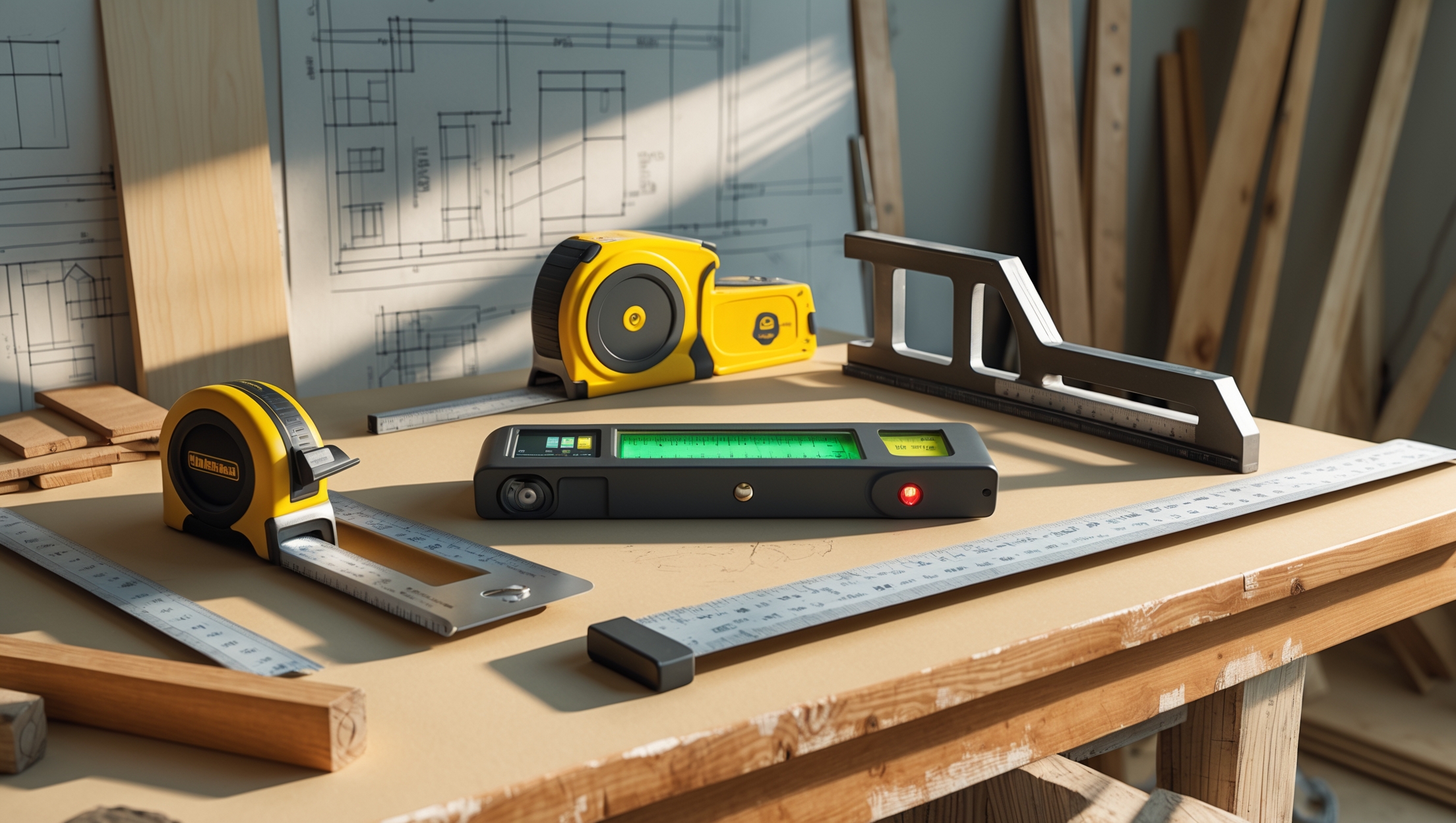
Introduction: Why Measurement Matters in DIY Home Improvement
Every successful home improvement project—big or small—relies on one fundamental skill: accurate measurement. Whether you’re hanging artwork, building custom shelving, installing flooring, or tackling a full-scale renovation, the mantra “measure twice, cut once” is more than just a cliché; it’s a safeguard against wasted materials, time, and money. Yet, many DIYers underestimate the importance of using the right measuring tools. Relying solely on a basic tape measure can lead to subtle but costly miscalculations. In this comprehensive guide, we’ll explore the essential measuring devices that belong in every homeowner’s toolkit. From classic mechanical tools to cutting-edge digital instruments, you’ll learn what each tool does best, when to use it, and how to get professional-level accuracy even if you’re a beginner. Equip yourself with the knowledge to make your next project seamless, safe, and precise.
The Basics: Core Measuring Tools for Every Homeowner
Tape Measure: The Ubiquitous Essential
No toolkit is complete without a reliable tape measure. Modern tape measures typically offer both imperial and metric readings, with lengths ranging from 12 to 35 feet (3.5 to 10 meters). Opt for a tape measure with a locking mechanism, a sturdy case, and clear, easy-to-read markings. For most home improvement tasks, a 25-foot model strikes the right balance between portability and reach.
- Best for: Measuring walls, furniture, flooring, and general distances.
- Pro Tip: Use the hook at the end for inside and outside measurements—most are slightly loose by design to account for thickness.
Carpenter’s Square (Framing Square & Speed Square)
A square is indispensable for marking accurate right angles and ensuring straight cuts. The large framing square is perfect for marking out rafters and staircases, while the compact speed square is excellent for quick checks and layout work.
- Best for: Laying out squares on lumber, checking corners, marking angles.
- Pro Tip: Use a speed square as a guide for circular saws to make precise crosscuts.
Level: The Key to Straight and True
Levels come in various lengths and types, but a 24-inch spirit level covers most home tasks. For hanging shelves or framing walls, a level ensures your work is perfectly horizontal or vertical. Digital levels offer added precision and can display angles in degrees.
- Best for: Hanging pictures, installing cabinetry, checking floors and walls for level or plumb.
- Pro Tip: Check your level’s calibration by flipping it 180 degrees and seeing if the bubble stays centered.
Advanced Measuring Tools for Next-Level Accuracy
Laser Distance Measurer
Laser distance measurers deliver instant, highly accurate readings for distances up to 300 feet, often with accuracy within 1/16 of an inch. They’re perfect for large projects where using a tape measure would be unwieldy—think measuring an entire room, ceiling height, or exterior dimensions.
- Best for: Room measurements, estimating square footage, high ceilings, quick checks.
- Features to Consider: Backlit screens, memory functions, Bluetooth connectivity for transferring measurements to your phone or computer.
Digital Caliper
When you need precision down to fractions of a millimeter, a digital caliper is your go-to tool. Use it for measuring the thickness of materials, inner and outer diameters, and depths—especially important for detailed woodworking, plumbing, or hardware fitting.
- Best for: Woodworking joinery, checking pipe diameters, hardware installation.
- Pro Tip: Clean the caliper’s jaws before use for maximum accuracy.
Stud Finder with Deep-Scan & Center Detection
Finding studs is essential for safely mounting heavy items. Modern stud finders offer deep-scanning modes to detect wood, metal, and even live wires. Center-detection features help you hit the stud’s strongest point.
- Best for: Hanging TVs, shelves, cabinets, or artwork.
- Pro Tip: Move the tool slowly and mark both edges, then find the center for the most secure mount.
Specialty Measuring Devices: For Unique Projects
Angle Finder (Bevel Gauge)
Angle finders are invaluable for projects involving non-standard angles—think crown molding, custom trim, or deck stairs. Digital models provide exact readings in degrees, while manual bevel gauges can be locked to transfer angles directly to your workpiece.
- Best for: Trim carpentry, staircases, roof framing, tile layout.
- Pro Tip: Combine with a miter saw to set precise cut angles.
Measuring Wheel
For landscaping, fencing, or large floor plans, a measuring wheel makes quick work of long distances. Simply roll the wheel along the path and read the distance from the counter.
- Best for: Outdoor projects, fencing, garden layouts, large room measurements.
- Pro Tip: Choose a wheel with a folding handle for easy storage.
Contour Gauge
Need to replicate curves or odd shapes, such as around pipes or moldings? A contour gauge captures the profile so you can transfer it to tile, flooring, or trim for a perfect fit.
- Best for: Flooring cuts around door jambs or pipes, trim fitting, custom tile work.
- Pro Tip: A wider gauge covers larger profiles in one go.
Measuring for Success: Best Practices & Safety Tips
Double-Check Every Measurement
Even with the most advanced tools, human error can creep in. Always double-check your measurements—especially for permanent cuts or installations. Mark measurements clearly with a sharp pencil or marking knife for accuracy.
Understand Tool Tolerances
Each tool has its own tolerance for error. Know your tool’s accuracy and factor that into critical measurements. For example, a laser measurer’s margin of error is insignificant for wall length, but a caliper’s precision matters for hardware fitting.
Calibrate and Maintain Your Tools
Check your levels and squares for accuracy by testing against known straight edges. Replace batteries in digital tools regularly and store all devices in a dry, secure place to prevent damage or warping.
Mark Safely and Clearly
- Use fine mechanical pencils or marking knives for detailed work.
- Always mark on the waste side of your cut line.
- For repeat cuts, use stop blocks or templates to ensure consistency and speed.
Tool Shopping Guide: What to Look for and Where to Buy
Quality Over Quantity
Invest in reputable brands known for accuracy and durability, such as Stanley, Bosch, DeWalt, and Starrett. Features like rubberized grips, clear markings, and solid construction are worth the extra cost for longevity and reliability.
Starter Kits vs. Individual Tools
Starter kits often bundle basic tools at a discount but may sacrifice quality for price. Consider building your toolkit one piece at a time, prioritizing the most-used items first—like a tape measure, level, and square—before adding specialty devices as your projects demand.
Where to Shop
- Local hardware stores: Offer the advantage of hands-on comparison and staff expertise.
- Specialty tool retailers: Provide a wider selection, especially for advanced digital devices.
- Online platforms: Amazon, Home Depot, and Lowe’s offer extensive reviews and easy returns.
Project Scenarios: Choosing the Right Tool for the Job
Scenario 1: Installing Floating Shelves
- Tools Needed: Tape measure, stud finder, level, pencil.
- Measure shelf placement and spacing with your tape measure.
- Locate and mark studs using the stud finder’s center-detection feature.
- Use a level to ensure shelves are perfectly horizontal before drilling.
Scenario 2: Cutting Custom Countertops
- Tools Needed: Tape measure, carpenter’s square, digital caliper.
- Measure countertop area and depth accurately with tape and square.
- Use a caliper to measure sink cutout and hardware clearances.
- Double-check all measurements before making cuts—errors are costly at this stage.
Scenario 3: Laying Tile Around Irregular Obstacles
- Tools Needed: Tape measure, contour gauge, angle finder.
- Capture the profile of pipes or moldings with a contour gauge.
- Measure angles at corners or transitions with an angle finder.
- Transfer shapes and angles to your tile for a perfect fit.
Upgrading Your Toolkit: When to Go Digital
Digital measuring tools offer speed and accuracy but come at a higher cost. Upgrade when:
- You regularly undertake large-scale projects.
- You need to export measurements to design software or apps.
- Precision is critical—such as in cabinetry, tiling, or finish carpentry.
Always keep backup manual tools—batteries can die, and digital screens can fail at the worst times.
Conclusion: Precision Pays Off—Elevate Your DIY Results
In home improvement, precision isn’t just a matter of pride—it’s the foundation of every successful project. The right measuring tools empower you to work smarter, avoid costly mistakes, and achieve a professional finish, even on your first try. Whether you’re a weekend warrior tackling small upgrades or a seasoned DIY enthusiast planning a major renovation, investing in quality measuring devices will pay dividends in saved time, reduced waste, and superior results. Take the time to learn each tool’s strengths, keep them calibrated and well-maintained, and always double-check your readings. With a well-stocked measurement toolkit, you’ll have the confidence to take on any home improvement challenge—and know that your work will stand the test of time.
Remember, the difference between “good enough” and “outstanding” often comes down to a fraction of an inch. Equip yourself with the right tools and best practices, and watch your DIY skills—and your home—reach new levels of excellence.
You mentioned that tape measures often have both imperial and metric readings. Are there any situations in typical home DIY projects where using one system over the other would be more accurate or preferred?
Certain materials or instructions, like lumber in the US, are usually sized in inches and feet, making the imperial system more practical in those cases. Metric measurements can be better for precision or scientific projects, as they allow easy decimal conversions. Choose the system that matches your project’s instructions or your need for precision.
How much should I expect to budget for a good quality tape measure with the features you recommend, like a locking mechanism and clear markings? Are there brands that offer reliability without a high price tag?
For a quality tape measure with a locking mechanism and clear, easy-to-read markings, you can expect to spend between $10 and $20. Brands like Stanley, Komelon, and Milwaukee are known for reliable tape measures at reasonable prices, offering durability and user-friendly features without breaking the bank.
You mentioned that most home improvement tasks can be handled with a 25-foot tape measure. For larger projects like outdoor decks, would a longer tape be more reliable, or is 25 feet usually sufficient?
For projects like outdoor decks, a longer tape measure—such as a 50-foot or even 100-foot version—can make measuring easier and more accurate. While a 25-foot tape works for smaller projects, longer tapes help avoid having to reposition and ensure a continuous, reliable measurement for larger areas.
I noticed you recommend a 25-foot tape measure for most tasks. Are there situations in typical home projects where a shorter or longer tape would actually work better, or is 25 feet almost always the best bet?
A 25-foot tape measure covers most home projects, but for small indoor jobs like hanging pictures or assembling furniture, a 12- or 16-foot tape can be more convenient. For large outdoor projects like fencing or deck building, a 30-foot or longer tape might be helpful. Choose the length based on the typical scale of your projects.
Can you recommend specific digital measuring devices that are most user-friendly for beginners, or is it better to stick with classic tools like the tape measure and carpenter’s square for starting out?
For beginners, classic tools like a tape measure and carpenter’s square are reliable and easy to use. However, if you want a digital option, consider a simple digital laser distance measurer. Brands like Bosch and Tacklife make models that are accurate, intuitive, and often just require one button to operate.
You mentioned the difference between framing squares and speed squares, but as a beginner, how do I know when to use each one? Does it make sense to get both right away or start with just one?
A speed square is compact and great for quick marking and measuring, especially for 45- and 90-degree cuts on lumber. A framing square is larger and better for checking bigger angles or laying out stairs. For most beginners, starting with a speed square is often enough, and you can add a framing square later if you tackle larger projects.
For someone just getting into DIY home improvements, would you recommend investing in digital measuring tools right away, or are traditional mechanical ones enough for accuracy on most beginner projects?
For most beginner DIY projects, traditional mechanical measuring tools like tape measures and levels are usually accurate enough and cost-effective. As your skills and project complexity grow, you might consider investing in digital tools for added convenience and precision, but they’re not essential when starting out.
You mention both framing squares and speed squares for different tasks—could you expand on when you would specifically choose one over the other during a typical woodworking project?
Use a framing square when you need to check or lay out large 90-degree angles, especially for framing walls or building cabinets. A speed square is better for marking short, quick 90- and 45-degree lines, checking rafter angles, or making repetitive cuts on smaller boards. Choose based on the size and precision needs of your project.