

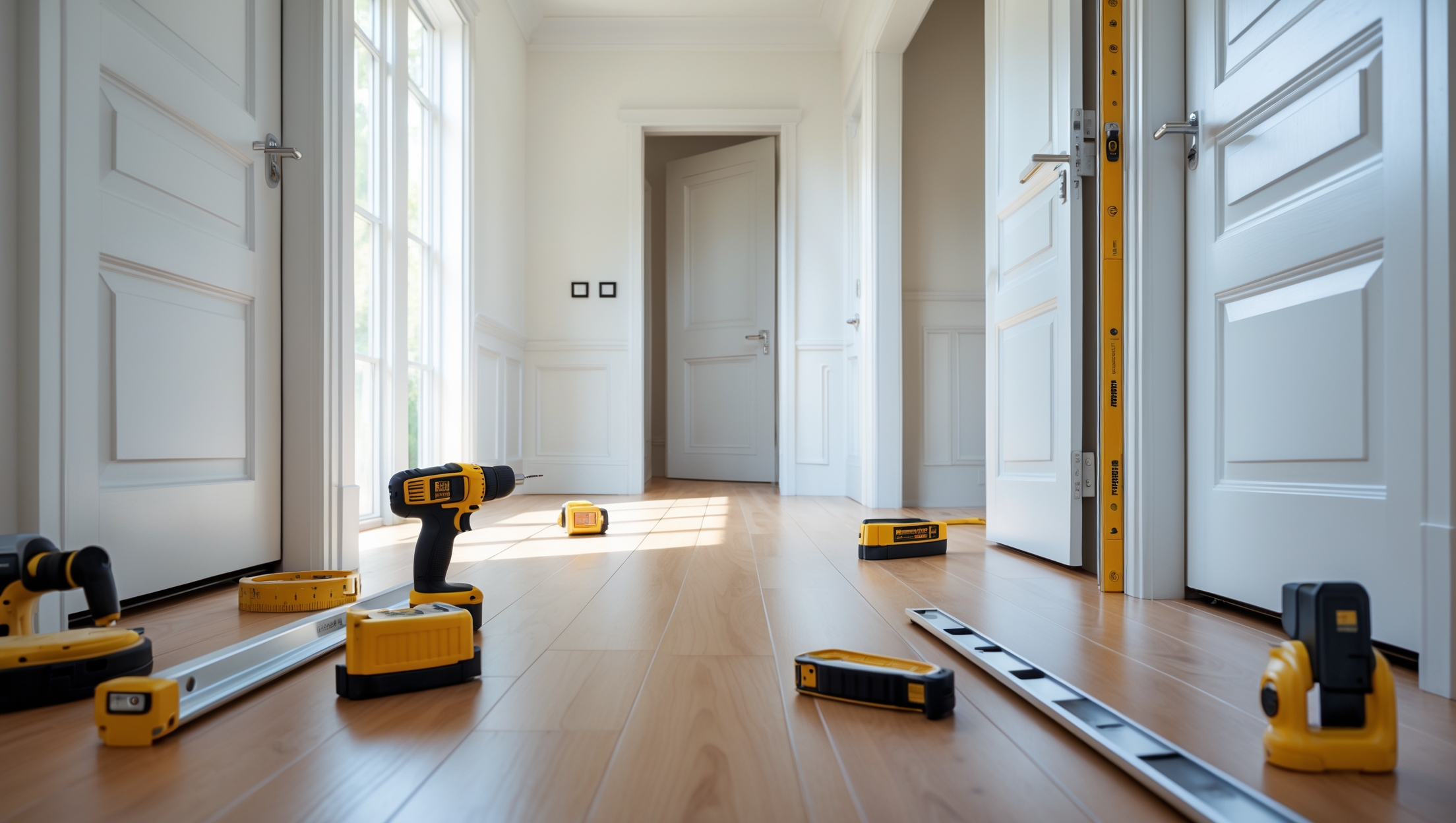
Introduction: Why Interior Door Installation Trips Up Beginners
Replacing or installing interior doors can dramatically refresh your home’s appearance, improve privacy, and even boost energy efficiency by reducing drafts between rooms. For many homeowners, tackling door installation as a DIY project seems straightforward—until they encounter misaligned frames, stubborn hardware, or unsightly gaps. Unfortunately, mistakes made during this process can lead to long-term frustration, wasted materials, and the need for expensive professional corrections.
This comprehensive guide will walk you through the most common beginner mistakes when installing interior doors, explaining both the “why” behind each pitfall and, more importantly, how to avoid them. Whether you’re updating a single bedroom door or undertaking a whole-house refresh, the following strategies, tips, and step-by-step solutions will empower you to achieve a flawless installation on your very first attempt. From careful measurement to selecting the right hardware and ensuring code compliance, read on to learn how to sidestep the errors that cost time and money—and finish with results you’ll be proud to show off.
Understanding Interior Door Types and Pre-Installation Choices
Solid vs. Hollow Core Doors
The first step is choosing the right type of door for your needs. Solid core doors offer better sound insulation and durability, making them ideal for bedrooms or home offices. Hollow core doors are lighter, more affordable, and suitable for low-traffic spaces like closets or pantries. Knowing where to use each type prevents premature wear and ensures your investment matches your home’s needs.
Prehung vs. Slab Doors
Prehung doors come attached to their own frame and hinges, simplifying installation when replacing an entire door unit, especially if the existing frame is damaged. Slab doors are just the door itself and require fitting to an existing frame, which is cost-effective but demands precise measurement and skill for a seamless fit. Many beginners underestimate the complexity of slab installations, leading to fitment issues.
Common Material Mistakes
- Ignoring Humidity and Expansion: Wood doors can swell or contract with seasonal changes. Acclimate wood doors to your home for at least 48 hours before installation to prevent future warping.
- Choosing the Wrong Finish: Unfinished doors must be sealed or painted to prevent moisture damage. Skipping this step leads to warping, peeling, and reduced lifespan.
Measurement Mishaps: The #1 Source of Installation Failure
Why Accurate Measurement Matters
Most beginner errors start with measurement. An interior door that is even 1/8″ too large or small can stick, leave unsightly gaps, or require excessive trimming that weakens the structure. Always measure the width, height, and thickness of the existing door and frame—never rely on the old door as your only reference, as houses settle and frames shift over time.
Best Practices for Measuring
- Use a steel tape measure for accuracy.
- Measure the width in three places (top, middle, bottom) and use the smallest number.
- Measure the height on both sides and use the shortest measurement.
- Check the frame’s squareness by measuring diagonally from corner to corner; large discrepancies indicate the need for frame adjustments.
- Document hinge placement and spacing if reusing existing hardware.
Common Measurement Mistakes
- Measuring only the old door, not the frame.
- Ignoring uneven floors, which can affect clearance at the bottom.
- Ordering the wrong door swing (left-hand vs. right-hand).
Frame and Rough Opening Errors
Verifying Frame Condition
Installing a new door in a damaged or warped frame is a recipe for frustration. Look for cracks, rot, or bowing in the jambs. If you find damage, repair or replace the frame before proceeding. Trying to “make it work” with shims can create alignment problems and reduce door lifespan.
Ensuring the Rough Opening is Square
The rough opening should be 2 inches wider and taller than the door itself to allow for shimming and adjustment. If the opening is out of square, use shims to correct it before installing the new door. Failing to do so can prevent the door from closing properly and affect the appearance of trim and hardware.
Installation Mistakes: From Shimming to Hardware
Improper Use of Shims
Shims are used to ensure the door is plumb and level. Beginners often:
- Use too few shims, leading to a loose or wobbly door.
- Over-shim one side, causing the door to swing open or closed on its own.
- Fail to trim excess shim material, leaving ugly protrusions behind the trim.
Incorrect Screw Placement
Securing hinges with short screws or into drywall instead of the framing can cause the door to sag over time. Always use long screws (at least 2.5″) into the wall stud at the top hinge. This provides the strength to resist the door’s weight and daily use.
Hinge Alignment Mistakes
Misaligned hinges result in binding, squeaking, or a door that won’t close flush. Use a combination square to mark hinge locations accurately and pre-drill pilot holes to prevent splitting the wood. Test-fit the door before final tightening.
Hardware and Latch Issues
Common problems include:
- Mounting the strike plate too deep or shallow, leading to a latch that doesn’t engage.
- Installing handles or locks upside down or misaligned, causing binding or cosmetic issues.
- Not reinforcing strike plates on bedroom or bathroom doors, which can reduce privacy or security.
Finishing Touches and Aesthetic Pitfalls
Improper Trimming and Cutting
Trimming the door to fit the opening can be necessary, but careless cutting leads to chipping or uneven edges. Always:
- Use a sharp, fine-tooth saw and painter’s tape to prevent splintering.
- Sand cut edges smooth and reseal or paint exposed wood to prevent moisture damage.
Skipping Caulk or Paint Touch-Ups
Leaving gaps between the trim and wall not only looks unfinished but also allows drafts and dust. Fill gaps with paintable caulk and touch up paint after installation for a polished, professional appearance.
Ignoring Door Stop Placement
Incorrectly placed door stops can make doors rattle or fail to close tightly. Position stops so they make full, even contact with the door edge.
Compliance, Permits, and Safety Considerations
When Permits Matter
While most interior door replacements do not require permits, enlarging openings or altering load-bearing walls definitely does. Check your local building codes before removing or widening any wall section. Failure to obtain necessary permits can result in fines or complications during home resale.
Fire-Rated Doors and Code Compliance
Doors leading to attached garages or certain utility spaces must be fire-rated in many jurisdictions. Using a non-compliant door in these locations is both unsafe and a potential code violation. Always select the appropriate door for each location in your home.
Safety Checklist
- Wear safety glasses and ear protection when cutting or drilling.
- Use dust masks when sanding to avoid inhaling fine particles.
- Secure the workpiece when drilling or chiseling to prevent slips.
- Keep power tools away from children and pets during the project.
Step-by-Step: Flawless Interior Door Installation
Tools and Materials Needed
- Measuring tape, level, combination square
- Cordless drill, screwdriver set
- Wood shims, hammer
- Fine-tooth saw (hand or power)
- Painter’s tape, caulk, paint
- Door hardware (hinges, handle/lockset, strike plate)
Installation Steps
- Remove the old door and hardware. Unscrew hinges and handles, then carefully pry off trim if replacing the frame.
- Inspect and prepare the rough opening. Repair any damage and verify squareness.
- Dry-fit the new door or prehung unit. Check for fit and clearance at the top, bottom, and sides.
- Shim and level the frame. Use shims behind hinges and latch side, checking with a level at each step.
- Secure hinges with long screws into studs. Pre-drill to prevent splitting.
- Install hardware. Carefully align handles, locksets, and strike plates, testing operation after each piece.
- Trim excess shims and install casing/trim. Nail trim in place, caulk gaps, and touch up paint as needed.
- Test for smooth operation. The door should swing freely, latch securely, and sit flush with the stop.
Maintenance Best Practices to Prolong Door Life
Routine Checks
Twice a year, inspect hinges and hardware for loosening or squeaks. Tighten screws and lubricate moving parts with a silicone-based product. Check for signs of swelling or sticking, especially after seasonal humidity changes.
Cleaning and Upkeep
- Wipe down surfaces with a damp, non-abrasive cloth.
- Touch up paint or finish at the first sign of chips or scratches to prevent moisture intrusion.
Preventing Common Issues
- Use door stops to prevent handle or knob from striking walls.
- Address sticking doors promptly—don’t force them open, as this can damage both door and frame.
Conclusion: Achieving Professional Results and Long-Term Satisfaction
Installing or replacing interior doors is among the most satisfying DIY home improvement projects, combining functional upgrades with visible, daily rewards. However, as we’ve explored in this guide, what appears to be a simple task is fraught with opportunities for costly mistakes—especially for first-timers. From accurate measurement and proper material selection to careful frame preparation and hardware installation, every step demands attention to detail.
By learning from common beginner errors and following best practices, you can sidestep pitfalls that lead to misaligned doors, drafty gaps, unsightly finishes, and long-term headaches. Take the time to understand your specific door and frame situation, invest in quality materials, and never rush the installation process. When in doubt, consult local codes for compliance, especially regarding fire-rated doors and structural changes. Most importantly, prioritize safety at every stage—protecting both yourself and your investment.
With patience, planning, and the expert strategies outlined here, you’ll not only achieve a flawless interior door installation but also gain the confidence and skills for future home improvement projects. Your home will thank you with smoother operation, improved privacy, and a polished look that stands the test of time.
When choosing between solid core and hollow core doors, is there a noticeable difference in sound transfer between rooms, or is it mainly about durability?
There is a noticeable difference in sound transfer. Solid core doors are much better at blocking noise between rooms compared to hollow core doors. While durability is also a factor, if sound reduction is important to you, solid core doors are the better choice.
When fitting a slab door to an existing frame, what’s the best way to deal with old frames that aren’t perfectly square? Are there tips to get a tight fit without creating gaps or binding?
To fit a slab door to an out-of-square frame, start by carefully measuring the frame’s width at several points and transfer those measurements to the door. Plane or sand the door edges incrementally, checking the fit often. Use a sharp block plane and focus on the areas that bind. Scribing the door to match any irregularities in the frame edge can help achieve a snug, gap-free fit.
When deciding between solid and hollow core doors, is there a big difference in how difficult they are to install for someone doing this for the first time?
Solid and hollow core doors are installed using the same basic process, but solid core doors are heavier. This extra weight can make them trickier to handle and hang, especially if you’re working alone. Otherwise, the steps are very similar, so either type is manageable for a beginner with some patience.
You mentioned that hollow core doors are good for closets and pantries, but is there a big difference in insulation compared to solid core doors if I use them for bedrooms?
Yes, there’s a noticeable difference in insulation between hollow core and solid core doors. Solid core doors provide much better sound and thermal insulation, which makes them preferable for bedrooms where privacy and noise reduction are important. Hollow core doors are lightweight and more affordable but don’t block sound as effectively.
When you talk about precise measurement for slab doors, what’s the biggest mistake beginners make in measuring, and is there an easy way to double-check before cutting anything?
The most common mistake is measuring just the door slab, not accounting for the door frame or any gaps needed for smooth swinging. To double-check, dry-fit the slab in the opening before cutting—make sure to leave a small gap (usually 1/8 inch) around the edges for clearance.
Can you explain more about how to avoid unsightly gaps? I’m worried about measuring wrong and ending up with a drafty or uneven door.
To avoid gaps, measure the width and height of your door opening in several places, since walls and floors can be uneven. Use the smallest measurement as your guide, and check that your door frame is level and plumb before installing. If needed, use shims to adjust the frame for a snug, even fit all around.
If I go with a hollow core door for a closet, are there any specific installation steps that are different compared to solid core doors?
Installing a hollow core door for a closet generally follows the same basic steps as a solid core door. However, hollow core doors are lighter and more fragile, so handle them gently to avoid dents. Be careful when drilling for hardware to prevent crushing the thin veneer, and avoid over-tightening screws.
Can you explain a bit more about what kind of mistakes usually happen with measuring when fitting a slab door to an old frame? That step sounds nerve-wracking.
Measuring mistakes often happen when the old frame isn’t perfectly square or has shifted over time. People might measure just the height and width at one spot, missing out on irregularities. It’s important to measure at multiple points—top, middle, and bottom—so the slab door can be trimmed for an exact fit.
If my existing door frames aren’t perfectly square, is it still possible to use a prehung door, or should I stick with a slab? How much wiggle room is there for minor misalignment?
You can still use a prehung door if your frames aren’t perfectly square. Prehung units can handle minor misalignments, as you can shim the frame during installation to adjust for unevenness. If the frames are very out of square, it might be easier to fit and trim a slab door instead.
The article mentions that solid core doors are better for sound insulation, but are they noticeably heavier to install for one person? Any tips for handling them safely during installation?
Yes, solid core doors are significantly heavier than hollow core ones, which can make solo installation challenging. To handle them safely, use a door lifter or wedges to prop the door in place, and consider removing the door from its packaging just before installation to prevent damage. Having a second person to help is ideal, but if that’s not possible, take breaks and lift with your legs to avoid injury.
How much more complicated is it to replace all the interior doors in a house versus just doing one at a time? Is there a certain order you’d recommend tackling them in?
Replacing all the interior doors at once does add complexity, mainly in terms of time, organization, and space for storing doors and tools. However, it can be efficient if you have help. If tackling them sequentially, start with less visible rooms to practice, then move on to high-traffic or main areas once you’re confident in your technique.
Could you explain what kind of measurements are most important when replacing an old slab door with a new one? I’m worried about ending up with gaps or a door that doesn’t close properly.
When replacing a slab door, the most important measurements are the door’s height, width, and thickness. Also, measure the hinge locations and their distance from the top and bottom of the door, as well as the position of the doorknob hole. Matching these ensures the new door fits without gaps and operates smoothly.
What are some tips for ensuring the finished door doesn’t end up with unsightly gaps? I’m worried about measuring wrong and having to redo everything.
To avoid unsightly gaps, use a level and tape measure to check both the door frame and the door slab. Measure the opening at several points, as walls may not be perfectly square. Allow just enough clearance for smooth operation, and use shims to adjust the frame before securing it. Double-check your measurements before cutting or attaching anything.
When choosing between a prehung and a slab door, how do I know if my existing frame is too damaged to reuse, or if it’s still good for just replacing the door?
Check your current frame for signs like warping, cracks, water damage, or if it feels loose or uneven. If the frame is solid, square, and free of damage, you can likely reuse it with a slab door. If you notice structural issues or poor alignment, a prehung door with a new frame is usually the better choice.
For a busy parent on a budget, is there much of a difference in long-term maintenance costs between solid core and hollow core doors?
Solid core doors are generally more durable and better at resisting dents and noise, so they tend to require fewer repairs over time compared to hollow core doors. However, hollow core doors are cheaper upfront. For a busy parent, hollow core doors might need to be replaced sooner if they suffer heavy use, while solid core doors can last longer with less maintenance.
If I’m replacing a single bedroom door and the frame is in good shape, would you recommend using a slab door for better budget control, or is it worth investing in a prehung unit anyway?
If your existing frame is still in good condition and not warped, a slab door can be a great budget-friendly choice. Just double-check measurements, hinges, and handle placement. Prehung units are best when the frame is damaged or you want to update the whole assembly, but they’re usually more expensive.
What should I watch out for with hardware selection if I’m reusing existing hinges and knobs from an old door on a new one?
When reusing old hinges and knobs, check that their size and shape match the cutouts on your new door. Make sure screw holes align properly, and verify that the thickness of the new door is compatible with your existing hardware to avoid fitting issues.
You mentioned that prehung doors are easier for beginners, especially if the existing frame is damaged. How do I know if my current door frame is too damaged to reuse with a slab door?
Check your door frame for signs like rot, warping, cracks, or if it’s no longer square. If the frame feels loose, has gaps, or won’t hold hinges securely, it’s likely too damaged for a slab door. In these cases, a prehung door is a much better option.
Could you explain how to ensure the new door actually helps with drafts between rooms, especially when the old frame isn’t perfectly square?
To reduce drafts, use weatherstripping around the door frame after installation. If the old frame isn’t square, adjust the door and hinges so it fits snugly, and fill any gaps with foam or caulk before adding trim. This helps seal off airflow between rooms.
If I make a mistake with hardware placement and end up with small gaps, is there a reliable way to fix it without replacing the entire door or frame?
Yes, small gaps from hardware placement mistakes can often be fixed without replacing the door or frame. You can fill minor screw holes with wood filler, sand smooth, and repaint. For slightly misaligned hardware, consider adjusting the hardware position and using longer screws for better hold.
If I choose a hollow core door to save money, are there any specific installation steps I should be extra careful about to avoid damage?
With hollow core doors, it’s important to handle them gently to prevent dents or cracks. When installing hinges or hardware, avoid over-tightening screws, as the door material can strip easily. Make sure to support the door evenly while hanging and avoid cutting too much from any edge, since the core is thin.
What should I look out for when measuring existing frames to avoid the issue of unsightly gaps after installing a new door?
To prevent gaps, measure both the width and height of the existing frame in three places: top, middle, and bottom for width, and left, center, and right for height. Use the smallest measurements. Also, check if the frame is square using a level, as uneven frames can cause gaps.
If I want better sound insulation but have a limited budget, are there affordable solid core options, or should I look into upgrading hollow core doors for bedrooms?
If you want better sound insulation on a budget, look for affordable solid core doors, as they naturally block more noise than hollow core doors. Some big-box stores sell value-priced solid core models. Upgrading a hollow core door usually isn’t cost-effective or as effective for soundproofing as just starting with a solid core option.
You mentioned that using the wrong door type can cause premature wear. Could you explain what kind of problems might happen if I put a hollow core door in a high-traffic area by mistake?
If you use a hollow core door in a high-traffic area, it can dent, crack, or even break much more easily than a solid core door. Hollow core doors aren’t as durable or soundproof, so you’ll notice more noise and may need to replace the door sooner due to everyday bumps and impacts.
How can I tell if I’ve measured precisely enough for a slab door? I’m worried about ending up with big gaps or an uneven fit.
To check your measurements for a slab door, measure the width and height of the door opening in at least three places each—top, middle, and bottom for width, and left, center, and right for height. The smallest measurement in each direction is what you should use. This helps prevent large gaps and ensures an even fit.
You mention that hollow core doors are better for low-traffic spaces, but do they hold up well in areas where doors might get bumped or kicked, like kids’ rooms?
Hollow core doors are lightweight and more affordable, but they’re not as sturdy as solid doors. In spaces like kids’ rooms, where bumps and kicks are likely, they may dent or get damaged more easily. For better durability in these areas, consider a solid core or solid wood door.
You mentioned that prehung doors are better if the frame is damaged, but is there an easy way to tell if a frame is too damaged for just a slab replacement? What should I look for?
Check for signs like cracks, rot, warping, or if the frame feels loose or uneven. If it’s difficult to close or latch the door, or if the frame is not square, that often means it’s too damaged for just a slab replacement and a prehung door is a better choice.
When choosing between solid core and hollow core doors, are there specific rooms where one is a definite no-go, like bathrooms or laundry rooms? The article mentions traffic but I’m curious about humidity or noise concerns.
Solid core doors are much better for bathrooms and laundry rooms because they handle humidity well and block noise. Hollow core doors can warp with moisture, so they’re not ideal for those spaces. For quieter rooms or places where you want privacy, like bedrooms, solid core is also a better choice.
You mention making sure to select the right solid or hollow core door for each room—how do I tell which type I already have if I’m not sure?
To identify your door type, try knocking on it—solid core doors sound dense and muted, while hollow core doors sound more hollow or echoey. You can also check the weight: solid core doors feel much heavier when you open or lift them compared to hollow core ones.
If I accidentally choose a hollow core door for a bedroom, is there a way to improve its sound insulation without replacing the whole door?
You can improve a hollow core door’s sound insulation by adding weatherstripping around the edges and installing a door sweep at the bottom to seal gaps. Applying a layer of soundproofing material, such as mass loaded vinyl, to the door’s surface can also help reduce noise transfer.
I’m wondering how much room for error there is with measurements, especially when installing a slab door. If my measurements are off by an eighth of an inch, will it be obvious, or is there any leeway for beginners?
With slab doors, an error of an eighth of an inch can make the door fit too tightly or leave a noticeable gap. There’s very little leeway—accuracy is important. You can make minor adjustments by sanding or planing the door edges, but it’s best to measure carefully to avoid extra work.
If my existing frame is slightly out of square, does that mean I should definitely go with a prehung door, or are there ways to make a slab door work without a lot of special tools?
You can still use a slab door with an out-of-square frame, but it may require careful trimming and fitting. You don’t necessarily need special tools—just basic ones like a plane, chisel, and saw. Take precise measurements and adjust the door edges to fit the frame for a clean result.
You mention beginner mistakes like misaligned frames and unsightly gaps—if I run into those issues after hanging the door, do you have tips for correcting them without having to start completely over?
If you notice misaligned frames, try loosening the hinge screws and gently adjusting the door’s position before retightening. For small gaps, weatherstripping or thin shims behind the hinges can help. Planing the door edges slightly is another fix. Most issues can be corrected without full removal as long as adjustments are gradual.
You mention matching door types to specific rooms, like solid core for bedrooms. If I want better soundproofing but am on a tight budget, are there specific hollow core options that perform well, or should I just invest in solid core for critical rooms?
Hollow core doors generally offer limited soundproofing compared to solid core doors. If soundproofing is a priority, it’s best to invest in solid core doors for critical rooms like bedrooms. Some higher-end hollow core models labeled as ‘sound-reducing’ may perform slightly better, but the difference is usually modest. Prioritize solid core doors where privacy and quiet matter most.
I’m planning to update all the doors in my house, but I’m worried about code compliance. What are the main building codes I need to check before getting started?
Before installing new interior doors, check your local building codes for minimum door width (often 32 inches for main passageways), required clearances, and fire-rated doors if connecting to garages or utility rooms. Also, ensure proper egress from bedrooms and confirm smoke and carbon monoxide detector placement requirements.
You mentioned that selecting the wrong hardware is a common mistake. Can you explain what types of hinges or hardware work best for heavier solid core interior doors?
For heavier solid core interior doors, it’s best to use heavy-duty ball bearing hinges, typically in a 3.5 or 4-inch size depending on the door. These offer better support and smooth movement. Also, consider sturdier screws and reinforced strike plates to help handle the extra weight.
If I want to replace my old doors but keep the existing frames, what’s the trickiest measurement to get right when working with slab doors so I avoid those unsightly gaps mentioned?
When using slab doors with existing frames, the trickiest measurement is the width. Measure the width of the current door at several points and use the smallest measurement. This helps ensure the new door fits snugly without leaving unwanted gaps along the edges.
Is there a typical timeframe a beginner should set aside to replace just one interior door, assuming they’re following your guide step by step?
For a beginner following the guide step by step, it’s reasonable to set aside about 2 to 3 hours to replace one interior door. This allows time for careful measurements, adjustments, and installation without feeling rushed.
For a first-time DIYer, how long should I expect it to take to install an interior door from start to finish, including all the measuring and hardware? I’m trying to plan my weekend around it.
For a first-time DIYer, installing an interior door usually takes about 3 to 5 hours. This includes measuring, prepping, hanging the door, and installing hardware. If you run into unexpected challenges, it could take a bit longer, so setting aside most of an afternoon is a good idea.
What are some beginner tricks for making sure there aren’t any unsightly gaps when fitting a slab door into an existing frame?
To avoid gaps, measure the door and frame carefully, then plane or sand the door edges for a snug fit. Check for square by using a level on both the frame and door. Hanging the door on temporary shims before final fastening helps spot and fix gaps early.
You mention that solid core doors are better for sound insulation, but are there specific problems to watch out for when installing these compared to hollow core doors? Just wondering if the extra weight makes the process harder.
Yes, solid core doors are heavier, which can make installation more challenging. You’ll likely need a second person to help lift and position the door. Also, use stronger hinges and ensure your frame is securely anchored. Take extra care during alignment, as the added weight can cause sagging if not installed properly.
Can you give a ballpark idea of how much extra time a beginner should set aside for measuring and fitting a solid core door compared to a hollow core one?
You should plan for an extra 30 to 60 minutes when measuring and fitting a solid core door, since they’re heavier, harder to maneuver, and may require more precise adjustments than a hollow core door. Take your time lifting and fitting to avoid damage or injury.
If I want to reuse my existing frame, how can I make sure a new slab door will fit tightly and avoid those unsightly gaps mentioned in the article?
To ensure a tight fit with your existing frame, carefully measure the frame’s height, width, and thickness before buying your new slab door. Trim the new door as needed, checking for even spacing—ideally about 1/8 inch—along the edges. Always test-fit the slab in the frame before finalizing hinge and hardware placement.
What’s the trickiest part when fitting a slab door into an existing frame? I’m worried I’ll mess up the measurements and end up with a door that doesn’t close right.
The trickiest part is usually getting the measurements and cuts just right so the slab fits perfectly in the existing frame. Double-check the width, height, and hinge placement, and trim carefully. Take your time marking and planing the edges to avoid gaps or a door that sticks.
If my existing frame is slightly out of square, would you recommend tackling a slab door installation myself, or is a prehung door really the safer choice for a DIY project?
If your frame is out of square, a prehung door is usually the safer DIY choice because it comes already mounted in a new frame, making it easier to get a good fit. Installing a slab door would require precise trimming and adjustments, which can be tricky for beginners.
How much of a difference does choosing a solid core versus hollow core make for soundproofing between bedrooms? Is it really noticeable enough to justify the extra cost?
Choosing a solid core door makes a significant difference for soundproofing between bedrooms. Solid core doors block much more noise than hollow core doors, which are quite thin and tend to let sound pass through easily. If privacy and quiet are important to you, the extra cost is generally worth it.
You mentioned code compliance—are there any specific codes or requirements I should double-check when replacing bedroom doors in a typical 1970s house?
For a 1970s house, check that bedroom doors are at least 80 inches tall and 24-32 inches wide, as required by most residential codes. Also, be sure doors open freely and aren’t obstructed. If the bedroom is a potential sleeping room, make sure it has proper egress—usually a window or door to exit in an emergency.
Could you elaborate on how to check if an existing door frame has suffered enough damage to require a prehung door instead of just replacing it with a slab? What specific signs should I be looking for?
Look for signs like warped wood, rot, cracks, or loose joints in the door frame. If the frame feels unstable, is out of square, or shows water damage or termite activity, it’s likely best to use a prehung door. Minor cosmetic flaws can be patched, but structural damage usually means full replacement is safer and easier.
You mentioned solid core doors are better for sound insulation. For a bedroom next to a busy hallway, is it really worth the extra cost compared to hollow core, or is the difference not that noticeable?
In a bedroom next to a busy hallway, the difference is definitely noticeable. Solid core doors block much more noise than hollow core, making it easier to sleep or relax without hallway sounds coming through. If sound insulation matters to you, the extra cost is usually worth it in this situation.
When updating several bedroom doors on a budget, is there a noticeable difference in long-term performance between solid core and high-quality hollow core doors?
Yes, there’s a noticeable difference over time. Solid core doors are sturdier, offer better sound insulation, and resist warping and dents more than hollow core doors. However, high-quality hollow core doors are lighter and more budget-friendly, but they may not last as long in busy households.
If I’m replacing a bedroom door with a prehung unit because my old frame is damaged, do I need any special tools or preparation to handle the existing framing issues?
Yes, you’ll need some extra preparation. Remove the old frame completely and inspect the rough opening for any damage or uneven spots. You may need a pry bar, hammer, level, shims, and possibly wood filler or replacement lumber to repair the framing before installing the new prehung door.
You mention that solid core doors are better for sound insulation, but do they require any special hardware or extra steps during installation compared to hollow core doors?
Solid core doors are heavier than hollow core doors, so you’ll need stronger hinges—typically three high-quality hinges per door instead of two. You might also find the installation more physically demanding, but the process itself is similar. Just be sure to use sturdy mounting hardware and double-check that the frame is properly reinforced to support the extra weight.
You mentioned that solid core doors have better sound insulation. Does using them throughout the house make a noticeable difference if the walls are thin, or would that not matter much?
Using solid core doors does noticeably improve sound insulation between rooms, even if your walls are thin. However, thin walls will still let some sound travel, so while the doors help, you won’t get maximum quiet unless wall insulation is also addressed.
How much of a difference in energy efficiency can you really expect between hollow core and solid core interior doors, or is it mostly about sound insulation?
The main difference between hollow core and solid core interior doors is sound insulation—solid core doors block noise much better. In terms of energy efficiency, the difference is minimal since interior doors don’t separate conditioned and unconditioned spaces. Most heat loss or gain happens through exterior doors and windows.
For someone replacing several older doors throughout the house, how do you know when it’s better to use prehung doors instead of just slab doors? Are there hidden costs or extra steps in swapping the whole frame that I should prep for?
Choosing prehung doors is best when your current frames are damaged, out of square, or you want to update the style completely. Prehung units include both the door and frame, but installing them means removing old frames, which can reveal drywall or trim repairs and possible adjustments for fit. Extra costs may come from new trim, shims, and touch-up paint or patching.
If I’m replacing an existing door with a prehung one, do I need to remove all of the old frame, or can I somehow fit the new frame into the existing opening?
You need to remove the entire old door frame, including the jambs and trim, before installing a prehung door. The new prehung frame is designed to fit into a bare opening, ensuring proper alignment and function.
If my current door frame looks fine but has a few dents, would you recommend going with a prehung door anyway, or is it worth repairing the frame and just getting a slab door to save some money?
If your door frame is structurally sound and only has minor dents, repairing it and installing a slab door can definitely save you money. Just fill and sand the dents before painting. A prehung door is mainly needed if the frame is warped, damaged, or out of square.
Can you give more details on how to tell if a room really needs a solid core door, or if a hollow core would work just as well for soundproofing?
To decide between solid core and hollow core doors for soundproofing, consider how much noise needs to be blocked. Solid core doors are much better at reducing sound, so use them for bedrooms, bathrooms, or rooms next to noisy areas. Hollow core doors are lighter and cheaper but let more sound through, so they’re fine for closets or rooms where noise isn’t a concern.
When you mention careful measurement, what are the most common spots where beginners mess up measuring for a slab door replacement?
Beginners often mismeasure the door height, width, or thickness, usually by not accounting for uneven frames or forgetting to check all three. Another common mistake is not measuring the distance from the edge of the door to the center of the handle and hinges. Double-check these spots before buying your slab.
If I want better sound insulation but am on a budget, is it worth paying extra for solid core doors everywhere, or just in bedrooms? Are there specific rooms you would recommend using hollow core in?
For better sound insulation on a budget, prioritize solid core doors for bedrooms and bathrooms, where privacy and quiet matter most. You can use hollow core doors for closets, pantries, and rooms where noise control isn’t as important. This way, you balance cost with effective soundproofing.
I’m on a pretty tight budget—are there any common mistakes with hollow core doors specifically that I should watch out for to avoid damaging them during installation?
With hollow core doors, be careful not to overtighten screws or nails, as this can crush the thin panels. Always use the correct screws for hinges and handles, and avoid trimming too much from the edges—removing more than about half an inch can weaken the structure or expose the hollow interior.
You mentioned that solid core doors have better sound insulation. Does installing these require different hardware or extra steps compared to hollow core doors?
Solid core doors are heavier than hollow core doors, so you’ll need sturdier hinges—usually three instead of two—and longer screws for better support. The installation process is mostly the same, but you may need an extra set of hands to help with lifting and positioning due to the added weight.
How do I know if a solid core door is really worth the extra money for a bedroom? Does it make a big difference in noise reduction compared to a hollow core, or is it mostly about durability?
A solid core door does make a noticeable difference in noise reduction compared to a hollow core, which can be important for bedrooms if you value privacy or quiet. It also offers better durability and feels more substantial. If noise and sturdiness matter to you, the extra cost is usually justified.
The article mentions the importance of accurate measurement. Can you clarify the best way to measure an older, slightly uneven frame before ordering a new interior door?
To measure an older, uneven frame, take width measurements at the top, middle, and bottom, and use the smallest number. For height, measure both left and right sides, again using the smallest. This ensures the new door will fit within the tightest spots of the frame.
If I’m replacing an old door frame that’s a bit out of square, do you recommend using a prehung door to make things easier, or is it possible to fix those issues with a slab door?
Using a prehung door is generally easier when dealing with an out-of-square frame, since the prehung unit comes with its own frame that you can install plumb and level. With a slab door, you’d need to carefully adjust or repair the old frame, which can be tricky if it’s not square.
Is there a way to tell if my existing frame is too damaged for a slab door and I should go with a prehung instead? I’m not sure what signs to look for before starting the project.
Check your frame for signs like major warping, splits, rot, or if it feels loose or out of square. If the frame is uneven, severely damaged, or can’t hold screws securely, you’re usually better off installing a prehung door rather than just a slab.
Are there mistakes specific to using slab doors that are more common for beginners, especially when it comes to measuring and cutting them to size?
Yes, with slab doors, beginners often make mistakes like not measuring the opening accurately, forgetting to account for the door frame and hinges, or cutting too much off one side. It’s important to mark hinge positions carefully and trim a little at a time, checking fit frequently to avoid gaps or poor alignment.
When deciding between a prehung and a slab door for an older house, how can you tell if the existing frame is too damaged for just a slab replacement?
Examine the existing door frame for signs like warping, rot, large cracks, or instability. If the frame feels loose, isn’t square, or has significant damage, it’s usually best to go with a prehung door, as a slab requires a sound, level frame for proper installation.
If I buy a slab door, what’s the best way to make sure my measurements are accurate so the new door fits tightly without gaps?
To ensure your slab door fits tightly, measure the existing door’s width, height, and thickness precisely. Check the door frame for squareness and measure at several points—top, middle, and bottom. Also, measure the hinge and handle placements from the top of the door, so you can replicate them on your new slab.
If you do end up with small gaps or misalignment after installation, what are some practical fixes or adjustments homeowners can try before calling in a professional?
If you notice small gaps or misalignment, try tightening or loosening the hinge screws first, as this can shift the door slightly. You can also use weatherstripping or foam strips to seal minor gaps. For gaps at the latch side, adjusting the strike plate or adding a thin shim behind the hinges can help realign the door.
I’m curious about using hollow core doors in high-traffic rooms to save on cost. What kind of issues have you seen if someone does that, like with noise or durability down the line?
Hollow core doors are budget-friendly, but in high-traffic rooms, you might notice more noise passing through since they don’t insulate sound well. They’re also less sturdy, so they can dent, crack, or even get damaged more easily compared to solid core doors, especially with frequent use.
When measuring for a slab door to fit an existing frame, do you need to account for any extra space for things like carpet or is the exact opening size enough?
When measuring for a slab door, you should consider the floor covering, like carpet. Leave a gap of about 1/2 inch between the bottom of the door and the finished floor to allow clearance. Measuring just the opening may not leave enough space if you have thick carpet.
For someone who’s never installed an interior door before, how long should I realistically expect the whole process to take if I’m doing just one bedroom door?
If you’ve never installed an interior door before, you should set aside about 2 to 4 hours for a single bedroom door. This gives you time to carefully measure, fit, make adjustments, and install hardware without rushing.
You mentioned that solid core doors are better for sound insulation, but do they require different hardware or reinforcement in the frame compared to hollow core doors during installation?
Solid core doors are heavier than hollow core doors, so it’s best to use sturdier hinges—usually three heavy-duty hinges instead of two. While the frame doesn’t typically need special reinforcement, make sure it is firmly anchored and plumb to support the extra weight.
If I pick a hollow core door for a bedroom, are there any tricks to improve sound insulation during installation without going for a solid core door?
To boost sound insulation with a hollow core bedroom door, use weatherstripping around the frame, install a door sweep at the bottom, and be sure the door fits snugly without large gaps. Adding a layer of acoustic sealant along the edges can also help dampen noise transfer.
If I accidentally create small gaps during installation and notice drafts, what are the easiest fixes that won’t require taking the whole door down again?
If you notice small gaps and drafts, you can use weatherstripping, foam tape, or door sweeps to seal them without removing the door. Applying caulk around the door frame can also help close minor gaps and prevent drafts effectively.
How much should I budget for possible mistakes or wasted materials if I’m installing interior doors for the first time? I’d like to avoid surprises, especially if I mess up some of the cuts.
For a first-time installation, it’s wise to budget an extra 10–20% of the cost of your door and trim materials to cover mistakes or wasted pieces. This cushion should help you handle issues like incorrect cuts or accidental damage without unexpected expenses.
If my existing door frame has some minor damage, would you recommend patching it before using a prehung door, or is it better to replace the entire frame for a smoother install?
If the damage to your existing frame is minor and doesn’t affect its structure or alignment, patching it should be fine before installing a prehung door. However, if the frame is warped or seriously compromised, replacing it will give you a better fit and smoother installation.
You mentioned draft reduction as a benefit—are there specific installation mistakes that make new doors worse for drafts than the old ones? Any tips to be sure I seal everything properly?
Yes, gaps around the door frame, uneven shimming, or not sealing the threshold can actually make drafts worse. To seal everything properly, use weatherstripping around the frame, apply caulk where the frame meets the wall, and ensure the door fits evenly in the opening before finalizing.
You mentioned that hollow core doors are best for low-traffic areas, but will they hold up over time if I have kids slamming them a lot?
Hollow core doors are lightweight and affordable, but they can get damaged more easily if exposed to frequent slamming or rough use, especially with kids. For high-traffic or active areas, a solid or solid-core door will be more durable and better withstand daily wear and tear.
What’s the best way to prevent unsightly gaps when installing a slab door into an older frame that might not be perfectly square?
To avoid gaps, carefully measure the frame and trim the slab door to fit its unique shape, checking all sides. Use a block plane or sander for slight adjustments. Test-fit often, and use shims during installation to help align the door evenly within the not-so-square frame.
Could you explain more about how to check if my old door frame is too damaged for a slab door, or should I just go with a prehung door to be safe?
To check if your old door frame is suitable for a slab door, look for signs like warping, rot, cracks, or loose joints. If the frame is solid and square, a slab should work. If there’s significant damage or the frame isn’t level, a prehung door is safer and ensures a proper fit.
For someone on a budget, is it harder or more time-consuming to install slab doors yourself compared to prehung doors, especially if you’ve never done either before?
Installing slab doors yourself can be trickier and more time-consuming for beginners, since you need to align and cut hinge and handle placements precisely. Prehung doors are easier because the frame and hinges are already attached, requiring less measuring and carpentry skill. Slab doors can save money, but expect a steeper learning curve and more careful work if you’re new to the process.
Solid core doors sound better for privacy, but I’m worried about how heavy they are. Are there any installation tips or special hardware needed to handle the extra weight during a DIY project?
Solid core doors are indeed heavier, so it’s wise to use heavy-duty hinges—typically three instead of two—for better support. It helps to have a second person assist with lifting and positioning. Using shims to support the door while attaching hinges can also make the process much easier and more precise.
Could you explain in more detail how to check if my existing frame is too damaged to use a slab door, especially if I’ve never replaced a frame before?
To check if your frame is too damaged for a slab door, look for major cracks, rot, or warping in the wood. Press gently along the sides to feel for softness, which could indicate hidden rot. Make sure the frame is square by measuring diagonally from corner to corner—both measurements should match. If you see any of these problems, replacing the frame may be necessary.
How can I tell during installation if I’ve accidentally misaligned the frame, and is there a way to fix this without taking everything apart and starting over?
You can spot a misaligned door frame if the gap around the door is uneven, or if the door swings open or closed on its own. To correct minor misalignment, adjust the shims behind the hinges or latch side—tap them gently until the frame is square and the gaps are even. You usually don’t need to take everything apart.
When you mention code compliance in interior door installation, what are some common code issues beginners overlook, especially with bedroom or bathroom doors?
Common code issues beginners miss include door width—bedroom and bathroom doors typically need to be at least 32 inches wide for accessibility. Also, doors should swing clear of fixtures like toilets or beds, and privacy locks are often required for bathrooms. Be sure to check for required clearance under the door for ventilation, especially in bathrooms.
For sound insulation, how much of a real-world difference does a solid core door actually make between bedrooms? Wondering if it’s worth the extra cost in a smaller house.
A solid core door can make a noticeable difference in reducing sound transmission between bedrooms compared to a hollow core door. The extra mass helps block more noise, which is especially helpful if privacy or quiet is important. In a smaller house, it could be worth the extra cost for improved comfort, especially in high-traffic or shared areas.